Dziedzina
Cyberbezpieczeństwo
Pojęcia bezpieczeństwa, które powinna znać każda firma: phishing, ransomware, szyfrowanie, uwierzytelnianie dwuskładnikowe, zero trust, kopie zapasowe i nawyki chroniące dane oraz konta.
Pojęcia w tej dziedzinie: 35
Cyberbezpieczeństwo
T
Two-Factor Authentication 2FA Two-factor authentication is a sign-in that asks for your password and then for something you are holding, so a stolen password alone is not enough to get in. Przeczytaj definicję
P
Phishing Phishing is a message built to look like it came from someone you trust, so that you hand over a password, a code or a payment. Przeczytaj definicję Password Manager A password manager is a small program that remembers every password for you and keeps them locked away, leaving you just one to memorise. Przeczytaj definicję
A
Authenticator App An authenticator app is a free app on your phone that produces the six-digit code a website asks for after your password, so a stolen password is not enough. Przeczytaj definicję
S
SIM Swap Fraud SIM swap fraud is a scam in which a criminal moves your phone number onto their own SIM card, so your calls and security codes reach them instead. Przeczytaj definicję Social Engineering Social engineering is an attack on the person rather than the computer, where someone uses fear or hurry to talk you into handing over a code or a payment. Przeczytaj definicję
I
Invoice Fraud Invoice fraud is a fake or altered supplier bill that gets you to pay a real amount into a bank account the criminal controls. Przeczytaj definicję
Q
QR Code Phishing (Quishing) QR code phishing, also called quishing, is a scam where a fake code is stuck over a real one so your phone opens a fake payment page. Przeczytaj definicję
S
Security Awareness Training Security awareness training is the short, regular practice that teaches your staff to spot a fake email or phone call before they act on it. Przeczytaj definicję
M
Malware Malware is any program written to damage your computer or to work quietly for someone else while you carry on using it. Przeczytaj definicję
R
Ransomware Ransomware is a program that locks every file on a company's computers and then demands a payment before it will hand them back. Przeczytaj definicję
K
Keylogger A keylogger is a hidden program that records every key someone types on a computer, including the password to the company bank account. Przeczytaj definicję
B
Backup A backup is a second copy of your files, kept somewhere safe from whatever destroys the first copy, so you can get your work back. Przeczytaj definicję
D
Disaster Recovery Plan DRP A disaster recovery plan is a short written document that says exactly what your business does, and who does it, on the morning the systems stop working. Przeczytaj definicję
L
Least Privilege Least privilege means each person can open only the screens their own job needs, so a stolen account cannot reach the rest of the business. Przeczytaj definicję
U
User Access Review A user access review is a regular check of who can still log into your systems, including the accounts nobody remembers creating. Przeczytaj definicję
O
Offboarding Offboarding is the security work a business does when someone leaves, closing every login and shared password they had so nothing stays open behind them. Przeczytaj definicję
Z
Zero Trust Zero trust is a way of working where nobody is trusted just for sitting inside the office, and every single login is checked again. Przeczytaj definicję
P
Patch Management Patch management is the habit of updating every program and device you use on a set plan instead of whenever someone remembers. Przeczytaj definicję
E
End-of-Life Software EOL End-of-life software is a program its maker has stopped repairing, so any weakness someone finds in it from that day on stays open forever. Przeczytaj definicję Ethical Hacking Ethical hacking is an attack on your own system that you asked for and paid for, so a trusted expert finds the holes before a criminal does. Przeczytaj definicję
W
Web Application Firewall WAF A web application firewall is a filter that reads every request arriving at your website and blocks the ones that look like a known attack. Przeczytaj definicję
O
OWASP Top 10 The OWASP Top 10 is a free list of the ten mistakes that most often let a stranger into a website or a web application. Przeczytaj definicję
J
Jailbroken Device A jailbroken device is a phone whose built-in protections have been removed on purpose, which lets one app read what another app keeps private. Przeczytaj definicję
T
Third-Party Risk Third-party risk is the chance that your data leaks through a supplier, a freelancer or a plugin you trusted, rather than through your own team. Przeczytaj definicję
E
Encryption Encryption is a way of scrambling your information into nonsense, so that only the person holding the right key can read it again. Przeczytaj definicję
H
HTTPS HTTPS is the protected version of a web address, and it scrambles everything sent between a visitor's browser and your site so nobody in between can read it. Przeczytaj definicję
P
PCI Compliance PCI DSS PCI compliance is the set of safety rules that the card companies make every business follow before it is allowed to take card payments. Przeczytaj definicję
D
Data Breach A data breach is the moment private customer information leaves your control, whether a thief took it or someone simply sent it to the wrong address. Przeczytaj definicję
C
Cyber Insurance Cyber insurance is a policy that pays for the clean-up after an attack, as long as you kept the security promises you made on the application form. Przeczytaj definicję
G
GDPR GDPR GDPR is the European law that sets out how a business may collect, keep and use the personal information of the people it serves. Przeczytaj definicję
V
Vulnerability Scan A vulnerability scan is an automatic check that searches a website or an app for weaknesses attackers already know about and reports what it finds. Przeczytaj definicję Virtual Private Network VPN A virtual private network is a sealed tunnel through a public connection, so what your staff send on café or hotel wifi cannot be read by anyone nearby. Przeczytaj definicję
Z
Zero-Day Vulnerability A zero-day vulnerability is a hole in software that has just been found and has no fix yet, so everyone using that part is exposed until one arrives. Przeczytaj definicję
S
SQL Injection SQLi Atak na strony internetowe, w którym ktoś wpisuje polecenia dla bazy danych w formularzu lub adresie strony. Strona je wykonuje i ujawnia, zmienia albo usuwa dane, które powinna chronić. Przeczytaj definicję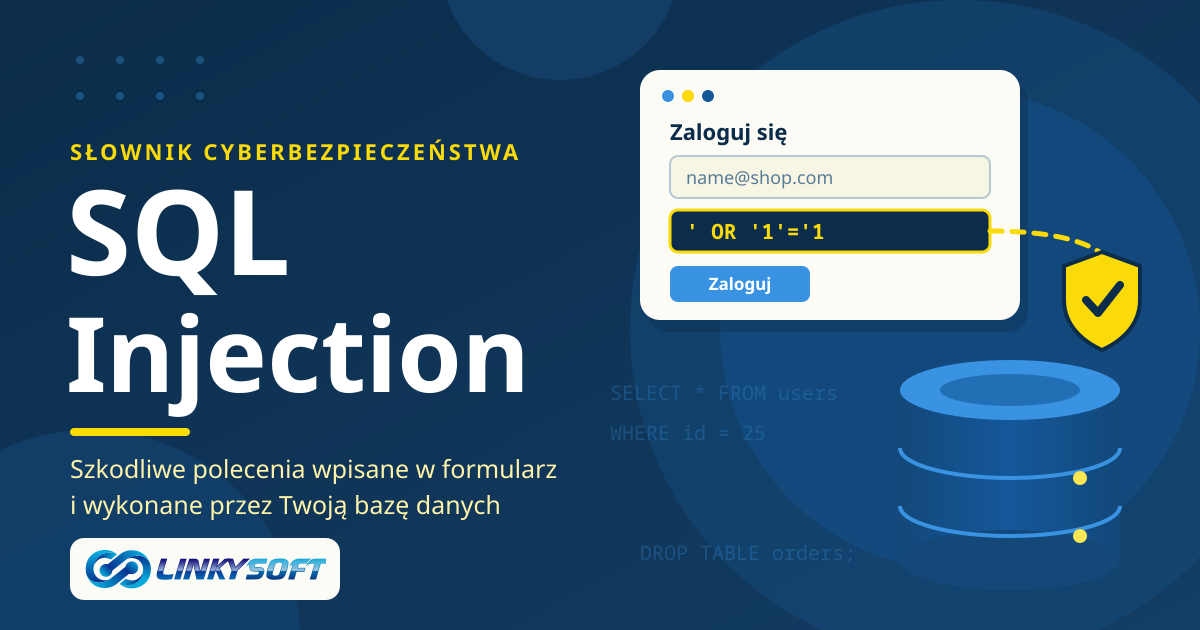
Inne dziedziny
Hosting Proste definicje pojęć hostingowych, które spotkasz, uruchamiając stronę w internecie: uptime, umowy SLA, przestrzeń dyskowa, SSL oraz elementy pakietu hostingowego decydujące o szybkości i niezawodności strony. 2 Serwery Do czego służą serwery i działające na nich bazy danych, prostymi słowami: VPS i serwery dedykowane, MySQL, PostgreSQL, MongoDB, Redis oraz pojęcia potrzebne, gdy zarządzasz własnym serwerem. 4 Domeny Nazwy domen w prostych słowach: rejestracja, DNS, serwery nazw, odnowienia, transfery i pojęcia potrzebne, aby wybrać, podłączyć i chronić adres swojej strony. 0 E-commerce Język sprzedaży online: SKU, warianty produktów, porzucone koszyki, śledzenie zamówień, płatności, systemy POS i liczby, które pokazują, jak naprawdę radzi sobie sklep. 30 Chmura obliczeniowa Chmura obliczeniowa i narzędzia, które dostarczają do niej oprogramowanie: czym jest chmura, jak Docker i Kubernetes uruchamiają aplikacje oraz jak Git i CI/CD zabezpieczają każde wydanie. 5 Media społecznościowe Pojęcia mediów społecznościowych dla firm: marketing na WhatsApp, kampanie z influencerami, reklamy wideo i słowa związane z budowaniem społeczności oraz rozmową z klientami tam, gdzie już są. 3 Strony internetowe Elementy składowe strony internetowej prostymi słowami: HTML, CSS, responsywny design, układy od prawej do lewej oraz różnica między stroną a aplikacją internetową. 6 Aplikacje internetowe Pojęcia, które spotkasz, gdy firma tworzy lub kupuje aplikację internetową: API, panele, role użytkowników, logowanie jednokrotne, wdrożenie, skalowalność i koszt utrzymania oprogramowania. 29 Aplikacje mobilne Pojęcia aplikacji mobilnych wyjaśnione: aplikacje natywne i hybrydowe, powiadomienia push, zakupy w aplikacji, weryfikacja w sklepie z aplikacjami, synchronizacja offline i to, co utrzymuje aplikację aktualną i bezpieczną. 25 Marketing internetowy Pojęcia marketingu internetowego wyjaśnione: współczynnik konwersji, landing page, lejek sprzedażowy, kampanie e-mail, pay per click, atrybucja i liczby pokazujące, co naprawdę działa. 26 Sztuczna inteligencja Sztuczna inteligencja prostymi słowami: uczenie maszynowe, duże modele językowe, chatboty i to, jak firmy używają AI, aby odpowiadać klientom i automatyzować codzienną pracę. 4 Internet rzeczy Pojęcia Internetu rzeczy w prostych słowach: połączone urządzenia, czujniki, bramki i słowa związane z inteligentnymi budynkami, śledzeniem oraz maszynami, które same raportują swój stan. 0 Języki programowania Krótkie i jasne definicje języków programowania, na których opiera się dzisiejsze oprogramowanie: Python, PHP, JavaScript, TypeScript, Java, Go, Rust, Kotlin, Swift, SQL i inne. 12 Frameworki Frameworki, na których budują programiści, opisane prosto: Laravel, Django, React, Next.js, Node.js, Flutter i to, co każdy z nich wnosi do projektu webowego lub mobilnego. 6 Wyszukiwarki Pojęcia związane z wyszukiwarkami: SEO, indeksowanie, mapy witryny, kanoniczne adresy URL, featured snippets, intencja wyszukiwania i to, co pomaga stronie pojawić się w Google i odpowiedziach AI. 30 Interfejsy użytkownika Pojęcia interfejsu i doświadczenia użytkownika: prototypy, user experience, tryb ciemny i decyzje projektowe, dzięki którym oprogramowanie i strony są proste i przyjemne w użyciu. 3