Area tematica
Sicurezza informatica
I termini di sicurezza che ogni azienda dovrebbe conoscere: phishing, ransomware, crittografia, autenticazione a due fattori, zero trust, backup e le abitudini che proteggono dati e account.
35 concetti in quest'area
Sicurezza informatica
T
Two-Factor Authentication 2FA Two-factor authentication is a sign-in that asks for your password and then for something you are holding, so a stolen password alone is not enough to get in. Leggi la definizione
P
Phishing Phishing is a message built to look like it came from someone you trust, so that you hand over a password, a code or a payment. Leggi la definizione Password Manager A password manager is a small program that remembers every password for you and keeps them locked away, leaving you just one to memorise. Leggi la definizione
A
Authenticator App An authenticator app is a free app on your phone that produces the six-digit code a website asks for after your password, so a stolen password is not enough. Leggi la definizione
S
SIM Swap Fraud SIM swap fraud is a scam in which a criminal moves your phone number onto their own SIM card, so your calls and security codes reach them instead. Leggi la definizione Social Engineering Social engineering is an attack on the person rather than the computer, where someone uses fear or hurry to talk you into handing over a code or a payment. Leggi la definizione
I
Invoice Fraud Invoice fraud is a fake or altered supplier bill that gets you to pay a real amount into a bank account the criminal controls. Leggi la definizione
Q
QR Code Phishing (Quishing) QR code phishing, also called quishing, is a scam where a fake code is stuck over a real one so your phone opens a fake payment page. Leggi la definizione
S
Security Awareness Training Security awareness training is the short, regular practice that teaches your staff to spot a fake email or phone call before they act on it. Leggi la definizione
M
Malware Malware is any program written to damage your computer or to work quietly for someone else while you carry on using it. Leggi la definizione
R
Ransomware Ransomware is a program that locks every file on a company's computers and then demands a payment before it will hand them back. Leggi la definizione
K
Keylogger A keylogger is a hidden program that records every key someone types on a computer, including the password to the company bank account. Leggi la definizione
B
Backup A backup is a second copy of your files, kept somewhere safe from whatever destroys the first copy, so you can get your work back. Leggi la definizione
D
Disaster Recovery Plan DRP A disaster recovery plan is a short written document that says exactly what your business does, and who does it, on the morning the systems stop working. Leggi la definizione
L
Least Privilege Least privilege means each person can open only the screens their own job needs, so a stolen account cannot reach the rest of the business. Leggi la definizione
U
User Access Review A user access review is a regular check of who can still log into your systems, including the accounts nobody remembers creating. Leggi la definizione
O
Offboarding Offboarding is the security work a business does when someone leaves, closing every login and shared password they had so nothing stays open behind them. Leggi la definizione
Z
Zero Trust Zero trust is a way of working where nobody is trusted just for sitting inside the office, and every single login is checked again. Leggi la definizione
P
Patch Management Patch management is the habit of updating every program and device you use on a set plan instead of whenever someone remembers. Leggi la definizione
E
End-of-Life Software EOL End-of-life software is a program its maker has stopped repairing, so any weakness someone finds in it from that day on stays open forever. Leggi la definizione Ethical Hacking Ethical hacking is an attack on your own system that you asked for and paid for, so a trusted expert finds the holes before a criminal does. Leggi la definizione
W
Web Application Firewall WAF A web application firewall is a filter that reads every request arriving at your website and blocks the ones that look like a known attack. Leggi la definizione
O
OWASP Top 10 The OWASP Top 10 is a free list of the ten mistakes that most often let a stranger into a website or a web application. Leggi la definizione
J
Jailbroken Device A jailbroken device is a phone whose built-in protections have been removed on purpose, which lets one app read what another app keeps private. Leggi la definizione
T
Third-Party Risk Third-party risk is the chance that your data leaks through a supplier, a freelancer or a plugin you trusted, rather than through your own team. Leggi la definizione
E
Encryption Encryption is a way of scrambling your information into nonsense, so that only the person holding the right key can read it again. Leggi la definizione
H
HTTPS HTTPS is the protected version of a web address, and it scrambles everything sent between a visitor's browser and your site so nobody in between can read it. Leggi la definizione
P
PCI Compliance PCI DSS PCI compliance is the set of safety rules that the card companies make every business follow before it is allowed to take card payments. Leggi la definizione
D
Data Breach A data breach is the moment private customer information leaves your control, whether a thief took it or someone simply sent it to the wrong address. Leggi la definizione
C
Cyber Insurance Cyber insurance is a policy that pays for the clean-up after an attack, as long as you kept the security promises you made on the application form. Leggi la definizione
G
GDPR GDPR GDPR is the European law that sets out how a business may collect, keep and use the personal information of the people it serves. Leggi la definizione
V
Vulnerability Scan A vulnerability scan is an automatic check that searches a website or an app for weaknesses attackers already know about and reports what it finds. Leggi la definizione Virtual Private Network VPN A virtual private network is a sealed tunnel through a public connection, so what your staff send on café or hotel wifi cannot be read by anyone nearby. Leggi la definizione
Z
Zero-Day Vulnerability A zero-day vulnerability is a hole in software that has just been found and has no fix yet, so everyone using that part is exposed until one arrives. Leggi la definizione
S
SQL Injection SQLi Un attacco web in cui qualcuno scrive comandi per il database in un modulo o in un indirizzo web, e il sito li esegue, rivelando, modificando o cancellando dati che dovrebbe proteggere. Leggi la definizione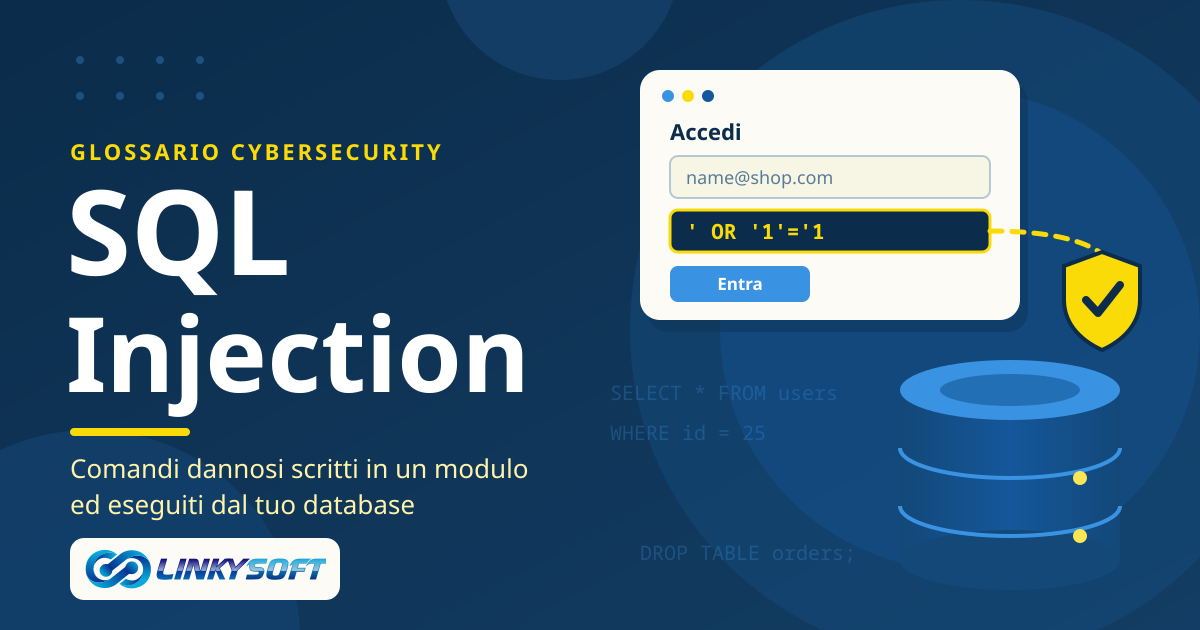
Altre aree tematiche
Web hosting Definizioni semplici delle parole dell'hosting che incontri quando metti online un sito: uptime, accordi sul livello di servizio, spazio di archiviazione, SSL e gli elementi di un piano hosting che decidono quanto un sito è veloce e affidabile. 2 Server Cosa fanno i server e i database che ospitano, in parole semplici: VPS e server dedicati, MySQL, PostgreSQL, MongoDB, Redis e i termini che servono quando gestisci un server tutto tuo. 4 Domini I nomi di dominio resi semplici: registrazione, DNS, nameserver, rinnovi, trasferimenti e le parole che servono per scegliere, collegare e proteggere l'indirizzo del tuo sito. 0 E-commerce Il linguaggio della vendita online: SKU, varianti di prodotto, carrelli abbandonati, tracciamento degli ordini, pagamenti, punto vendita e i numeri che mostrano come va davvero un negozio. 30 Cloud computing Il cloud computing e gli strumenti che ci portano il software: cos'è il cloud, come Docker e Kubernetes eseguono le applicazioni e come Git e CI/CD rendono sicuri i rilasci. 5 Social media Termini dei social media per le aziende: marketing su WhatsApp, campagne con influencer, annunci video e le parole per far crescere il pubblico e parlare con i clienti dove già si trovano. 3 Siti web I mattoni di un sito web in parole semplici: HTML, CSS, design responsive, layout da destra a sinistra e la differenza tra un sito web e un'applicazione web. 6 Applicazioni web I termini che incontri quando un'azienda sviluppa o acquista un'applicazione web: API, dashboard, ruoli utente, single sign-on, deploy, scalabilità e il costo di possedere un software. 29 App mobili Le parole delle app mobili spiegate: app native e ibride, notifiche push, acquisti in-app, revisione negli store, sincronizzazione offline e cosa mantiene un'app aggiornata e sicura. 25 Marketing digitale Termini del marketing digitale spiegati: tasso di conversione, landing page, funnel di vendita, campagne email, pay per click, attribuzione e i numeri che mostrano cosa funziona davvero. 26 Intelligenza artificiale L'intelligenza artificiale in parole semplici: machine learning, modelli linguistici di grandi dimensioni, chatbot e come le aziende usano l'AI per rispondere ai clienti e automatizzare il lavoro di ogni giorno. 4 Internet delle cose I termini dell'Internet delle cose resi semplici: dispositivi connessi, sensori, gateway e le parole dietro edifici intelligenti, tracciamento e macchine che comunicano da sole il proprio stato. 0 Linguaggi di programmazione Definizioni brevi e chiare dei linguaggi di programmazione dietro il software di oggi: Python, PHP, JavaScript, TypeScript, Java, Go, Rust, Kotlin, Swift, SQL e altri. 12 Framework I framework su cui lavorano gli sviluppatori, definiti in modo semplice: Laravel, Django, React, Next.js, Node.js, Flutter e cosa porta ciascuno a un progetto web o mobile. 6 Motori di ricerca Termini dei motori di ricerca spiegati: SEO, indicizzazione, sitemap, URL canonici, featured snippet, intento di ricerca e cosa aiuta un sito ad apparire su Google e nelle risposte dell'AI. 30 Interfacce utente Termini di interfaccia ed esperienza utente: prototipi, user experience, modalità scura e le scelte di design che rendono software e siti web facili e piacevoli da usare. 3