

Dziedzina
Tworzenie aplikacji webowych
Ten dział jest dla właścicieli firm, zespołów i osób prywatnych, które chcą mieć własną aplikację webową, ale trudno im zrozumieć fachowe słowa. Znajdziesz tu proste wyjaśnienia pojęć używanych przy planowaniu, tworzeniu i uruchamianiu aplikacji webowej, od dashboardów i ról użytkowników po API, hosting i kopie zapasowe. Każde pojęcie opisujemy zwykłym językiem, z prawdziwymi przykładami dla firm każdej wielkości i z każdej branży.
Pojęcia w tej dziedzinie: 14
Tworzenie aplikacji webowych
R
REST REST REST is a way of designing web APIs where every item gets its own web address, so programs can read or change it with the same few standard actions. Przeczytaj definicję
H
HTML HTML HTML is the set of labels that tells a browser whether a piece of a page is a heading, a paragraph, a link or a field in a form. Przeczytaj definicję
C
CSS CSS CSS is the language that decides how a web page looks, and because it sits in its own file, one change there restyles every page at once. Przeczytaj definicję
A
Aplikacja webowa Program komputerowy otwierany w przeglądarce internetowej na komputerze lub telefonie bez instalacji oprogramowania. Logujesz się, aby zarządzać codzienną pracą od zamówień po raporty, a dane pozostają na bezpiecznym serwerze. Przeczytaj definicję Automatyzacja przepływu pracy Sytuacja, w której system lub aplikacja webowa sama wykonuje codzienne, powtarzalne zadania, takie jak wysyłanie powiadomień i aktualizowanie danych, zamiast pracownika robiącego to ręcznie za każdym razem. Efekt: mniej błędów i więcej czasu dla Twojego zespołu. Przeczytaj definicję
D
Doświadczenie użytkownika (UX) UX Doświadczenie użytkownika (UX) to ogół wrażeń, emocji i reakcji osoby korzystającej ze strony internetowej, aplikacji lub systemu cyfrowego. Przemyślany projekt sprawia, że poruszanie się po serwisie jest proste i naturalne, co pozwala klientowi szybko osiągnąć cel bez zbędnego wysiłku. Przeczytaj definicję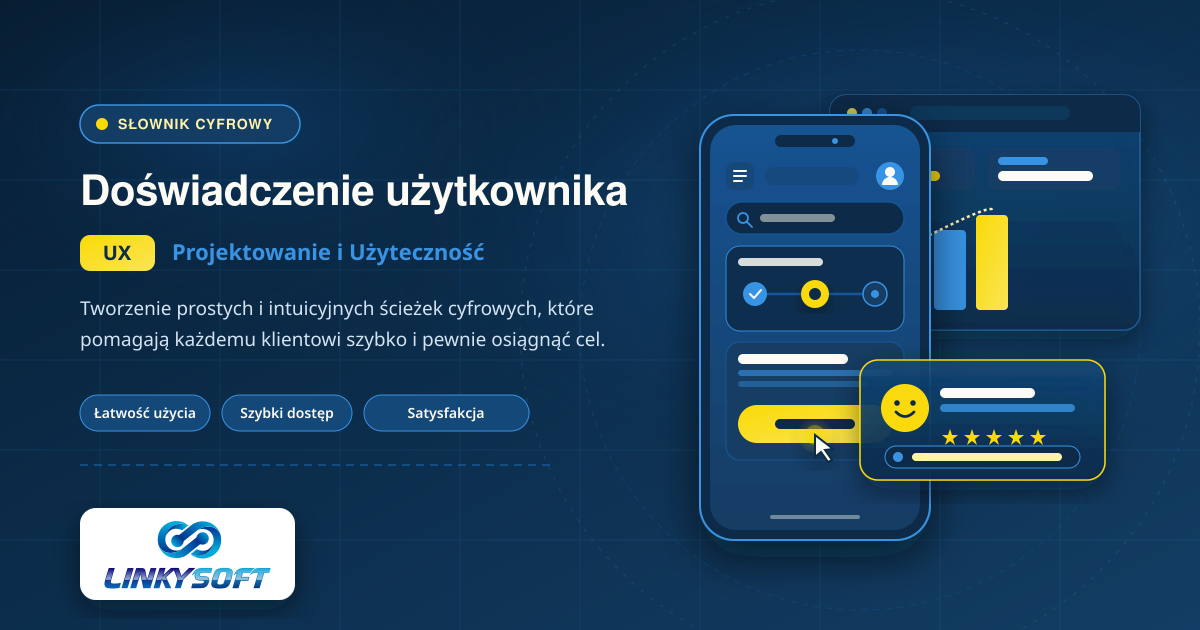
I
Interaktywny prototyp Interaktywny prototyp to dynamiczny, klikalny model cyfrowego produktu symulujący działanie i wygląd przyszłej strony lub aplikacji w celu przetestowania doświadczeń użytkownika przed etapem pisania kodu. Przeczytaj definicję Interfejs Programowania Aplikacji (API) API Cyfrowy pomost łączący stronę internetową lub aplikację mobilną z usługami zewnętrznymi, takimi jak bramki płatności i mapy, umożliwiający szybką i bezpieczną wymianę danych. Przeczytaj definicję

K
Kierunek pisania od prawej do lewej RTL Sposób projektowania stron i aplikacji, w którym tekst układa się od prawej do lewej, a menu, przyciski i strzałki zmieniają położenie jak w lustrze. Dzięki temu czytelnicy języka arabskiego widzą układ naturalny, uporządkowany i wygodny w obsłudze. Przeczytaj definicję Kod źródłowy Pliki tekstowe zawierające instrukcje programistyczne napisane przez twórców oprogramowania, które wskazują serwerom i urządzeniom sposób działania aplikacji. Przeczytaj definicję

P
Planowanie zasobów przedsiębiorstwa (ERP) ERP Oprogramowanie łączące w jednej bazie danych działy magazynu, sprzedaży, księgowości oraz kadr, co ułatwia bieżącą kontrolę operacji i pozwala podejmować trafne decyzje biznesowe. Przeczytaj definicję Portal klienta Bezpieczna strona internetowa, na ktorej klient loguje sie, aby sprawdzac status zamowien, pobierac faktury i kontaktowac sie ze wsparciem bez telefonowania. Przeczytaj definicję Projektowanie responsywne RWD Metoda tworzenia stron internetowych, która automatycznie dopasowuje układ strony, wielkość napisów i zdjęcia do dowolnego ekranu, od telefonu po komputer, bez potrzeby przybliżania. Przeczytaj definicję


T
Tryb ciemny Sposób wyświetlania ekranów strony lub aplikacji z ciemnym tłem i jasnym tekstem. Jest łagodniejszy dla oczu przy słabym świetle i zużywa mniej baterii w wielu nowoczesnych telefonach. Przeczytaj definicję
Inne dziedziny
Cybersecurity How systems are attacked, and the words we use for defending them. 32 Hosting & Infrastructure Where software actually runs, and what the numbers in a hosting contract mean. 2 SEO & Marketing The vocabulary of being found — search, content and measurement. 30 Programming Languages The languages software is written in, and what each one is genuinely good at. 12 Frameworks & Platforms The toolkits built on top of a language so teams do not rewrite the same foundations every time. 6 Databases & Data Where your records actually live, and why the choice changes what the system can do. 4 Cloud & Operations How software gets shipped, run and kept alive after it is written. 5 AI & Automation What the machines are actually doing when a product says it uses AI. 4 Design & User Experience How a screen is laid out, and why some sites feel easy while others feel confusing. 0 Mobile Apps The words you meet when you build an app for a phone and put it in a store. 28 Digital Marketing Paid ads, email, offers and the numbers that tell you whether any of it worked. 29 Social Media Posts, followers, reach and the everyday words of running an account well. 0 E-commerce Systems Selling online: the cart, the checkout, the stock and everything after the order. 29 Shops & Point of Sale The counter, the barcode, the till and the stock room of a real shop. 1 Maintenance Centres Repair jobs, spare parts, warranty and getting a device back to its owner. 0 School & University Systems Students, classes, attendance, marks and fees — the software a school runs on. 0 Hospital Management Beds, admissions, departments and the file that follows a patient through a hospital. 0 Clinic Management Appointments, visits, prescriptions and payments in a small medical practice. 1 Medical Laboratories Samples, tests, reference ranges and how a result reaches the person who ordered it. 0 Radiology Centres Scans, images, reports and the systems that store and share them safely. 0 Property & Rentals Units, tenants, contracts and rent — the paperwork of property, done in software. 0 Property Developers Projects, phases, instalment plans and selling a unit that is not built yet. 0 Salons & Spas Bookings, chairs, staff commission and keeping regulars coming back. 0 Gyms & Fitness Memberships, check-ins, classes and trainers — how a gym keeps track of everyone. 0 Web Applications Software that runs in a browser and does real work — dashboards, portals and systems staff use all day. 23 Custom Software Building a system around how a business actually works, instead of changing the business to fit a product. 0 Integrations & APIs Making two systems talk to each other, so the same number does not get typed twice. 0 Payments & Billing Taking money online, sending invoices and knowing exactly who has paid and who has not. 0 ERP & Accounting One set of books behind every department, so the numbers agree at the end of the month. 0 Software Projects How a software project is scoped, priced, built and handed over — and where they usually go wrong. 0 CRM & Customer Support Keeping track of who your customers are, what they asked for, and what you promised them. 0