Publishing to the App Store and Google Play Without Headaches
Store submission has rules that reject the unprepared. Knowing them in advance saves weeks of back-and-forth.
1 minute read
Native or cross-platform, what an app really costs, how the design keeps people coming back, and what it takes to get through App Store and Google Play review.
Store submission has rules that reject the unprepared. Knowing them in advance saves weeks of back-and-forth.
Downloads are easy; retention is hard. Great UX is what turns a first open into a daily habit.
There is no single price tag. Understanding the cost drivers helps you scope smartly and avoid nasty surprises.
One codebase for both platforms or peak performance per platform? The right call depends on your goals and budget.
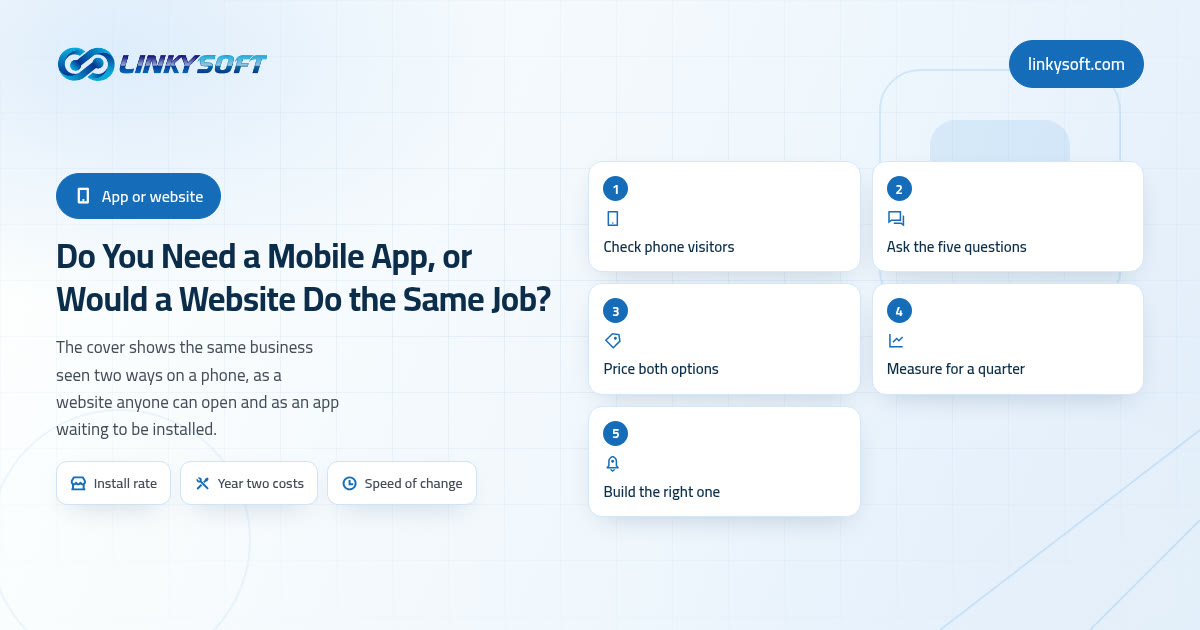
Most owners asking this have already been sold the answer, so here is ours before the detail: about eight in ten businesses need a phone friendly website first and an app later or never. This article settles it with three numbers rather than another feature list, covering how many people really install, what the build and the years after it cost, and how often one customer would open it.
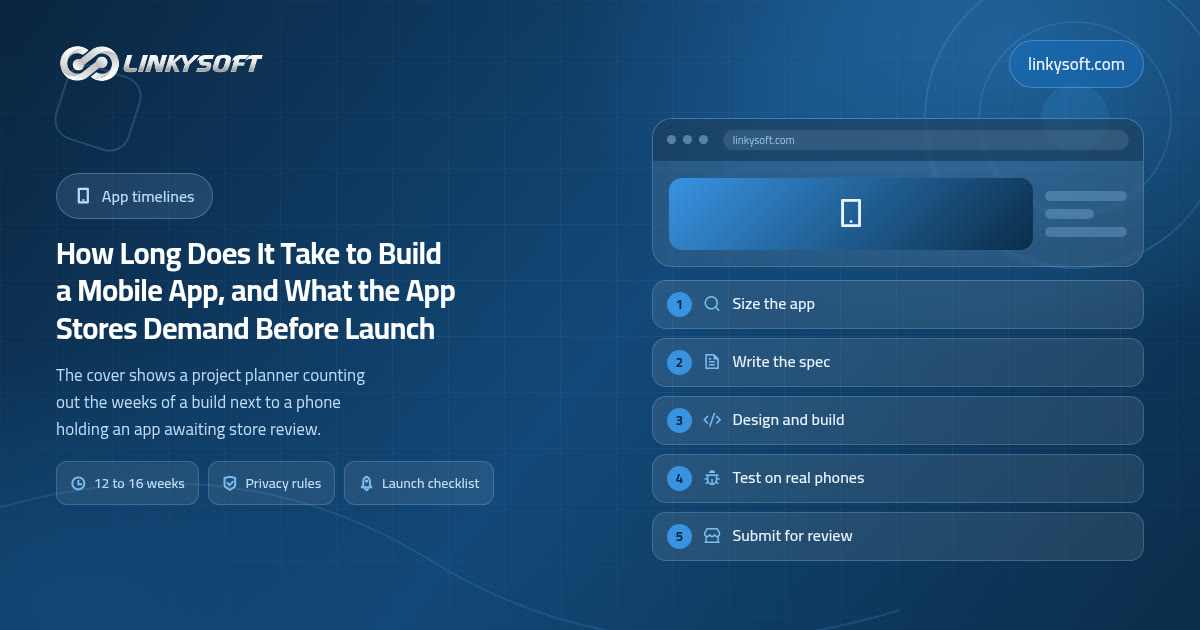
Most answers to this question stop at a vague three to six months. This one gives you the week by week arithmetic for three real sizes of app, then covers the part that actually makes launches slip: the developer accounts, the privacy questionnaire, the reviewer test account and the store rules Apple and Google apply before anybody is allowed to download what you have paid for.
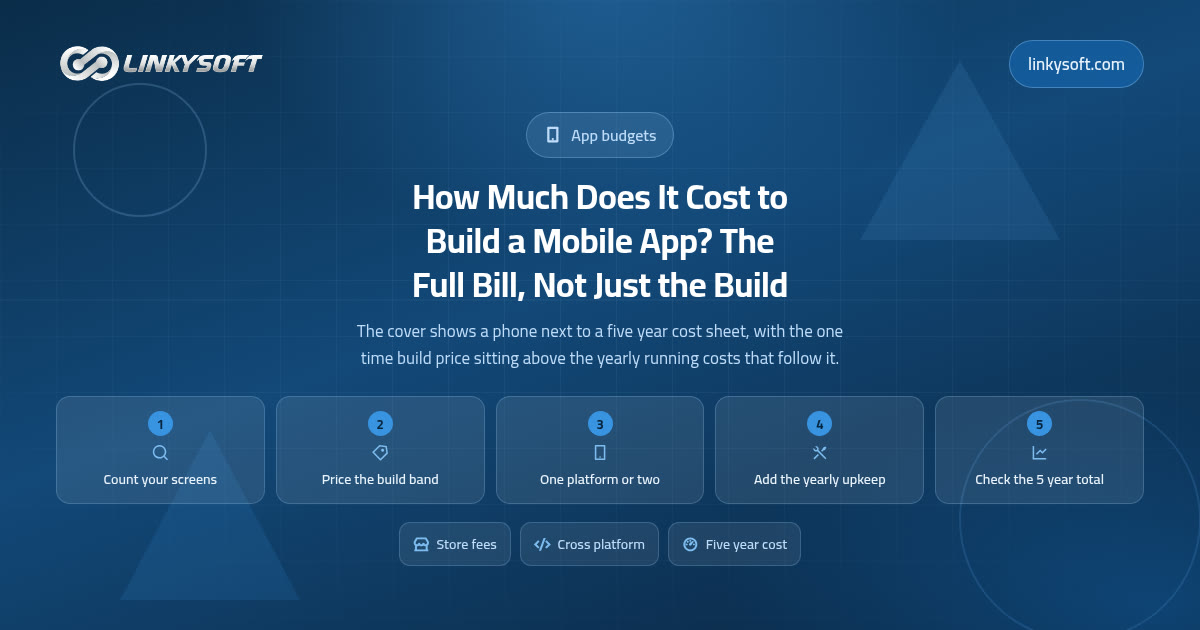
Nearly every guide to this question quotes a build price and stops there, which is why owners get a shock in month seven. This one prices the whole life of the app: the three bands we actually quote, the small bills nobody itemises, the two operating system releases a year that force paid work, the costs that arrive with users rather than with code, and a worked five year total showing the build is usually under half of what you really spend.
I'll help you with anything you want to do.
Pick a topic and ask me anything about it.
There are no topics to ask about right now.
Talk to a human
Talk to a human