How Modern Data Systems Help Businesses
Discover how updating your company data systems improves decision speed, protects files, and cuts operational costs.
317 articles
Discover how updating your company data systems improves decision speed, protects files, and cuts operational costs.
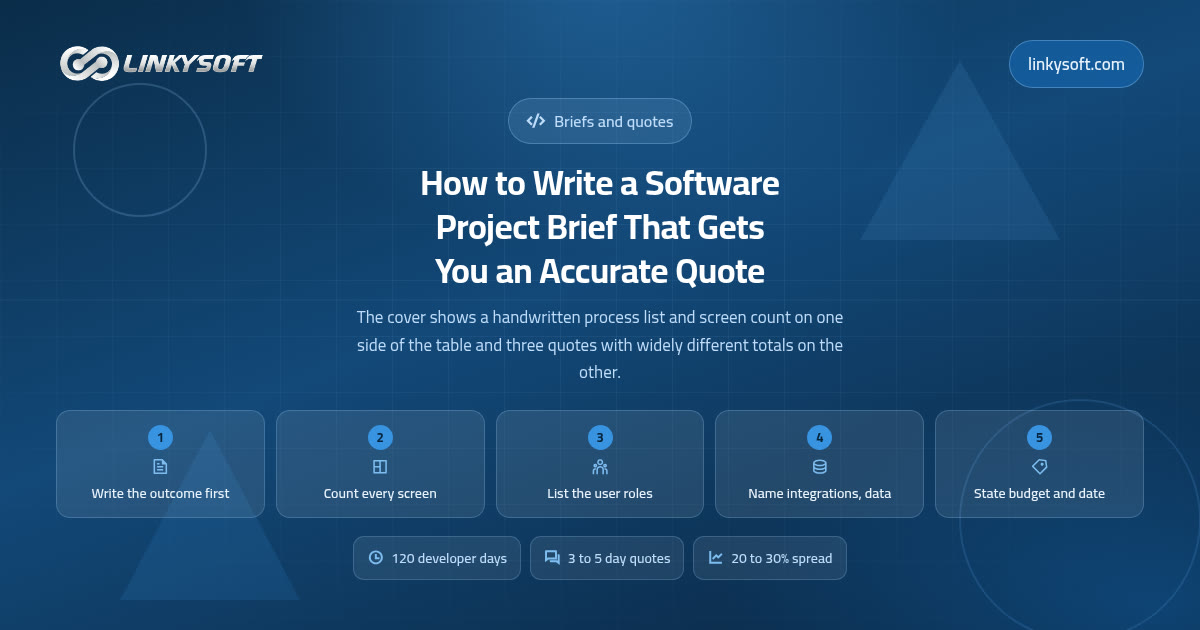
Most guides hand you a list of headings and wish you luck. This one shows you how each sentence you write turns into developer days and money: the screen rates we estimate with, what a second user role really costs, why one line about an integration can outweigh a month of work, and the arithmetic that lets you price your own project to within about 30 percent before anybody quotes you.
Upgrading outdated business databases into modern cloud systems helps companies make faster decisions, protect customer records, and use artificial intelligence effectively.
Upgrading legacy business databases into modern cloud systems prevents costly system crashes, improves decision-making speed, and secures sensitive records.
An architectural roadmap for technical leaders transitioning from legacy relational databases to open lakehouses, real-time streaming, and vector-enabled data platforms.
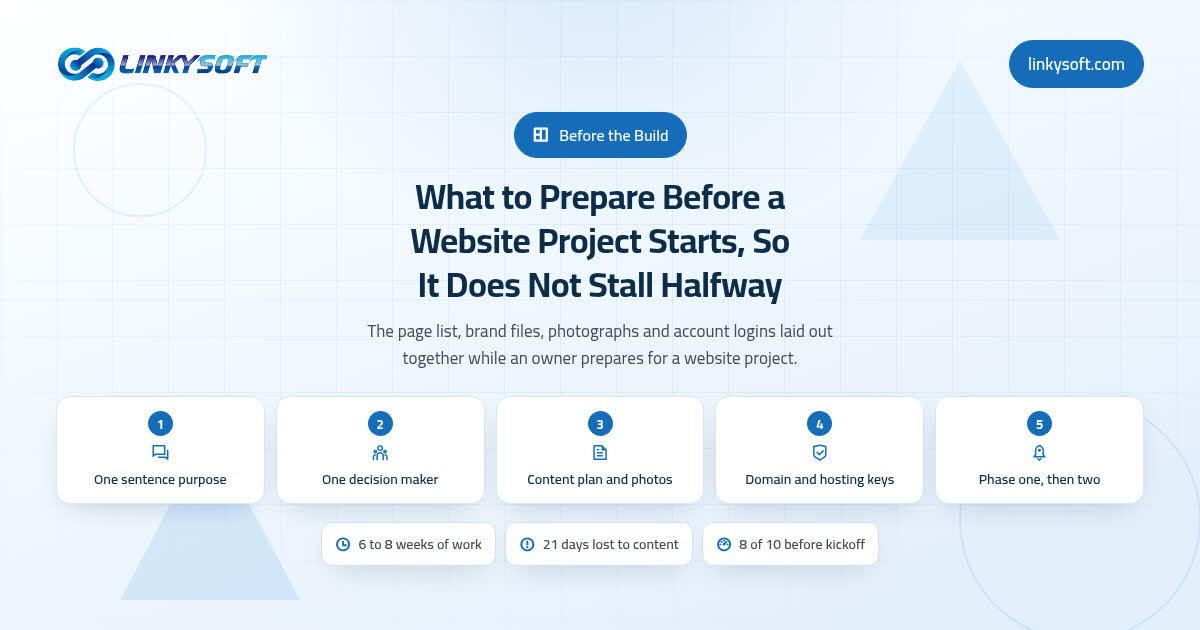
The build work inside a small business website comes to 6 to 8 weeks, yet a troubled project shows 4 or 5 months on the calendar, and nearly all of that gap is waiting rather than working. This guide puts a price in working days on every missing item, from text that never arrives to a domain login nobody can find, and ends with the ten question checklist worth finishing before anyone quotes you a date.
You do not need to rebuild everything to benefit from AI. The smart path adds it to the systems you already run.
Sorting, tagging, summarising, data entry — AI excels at the dull work that drains skilled people.
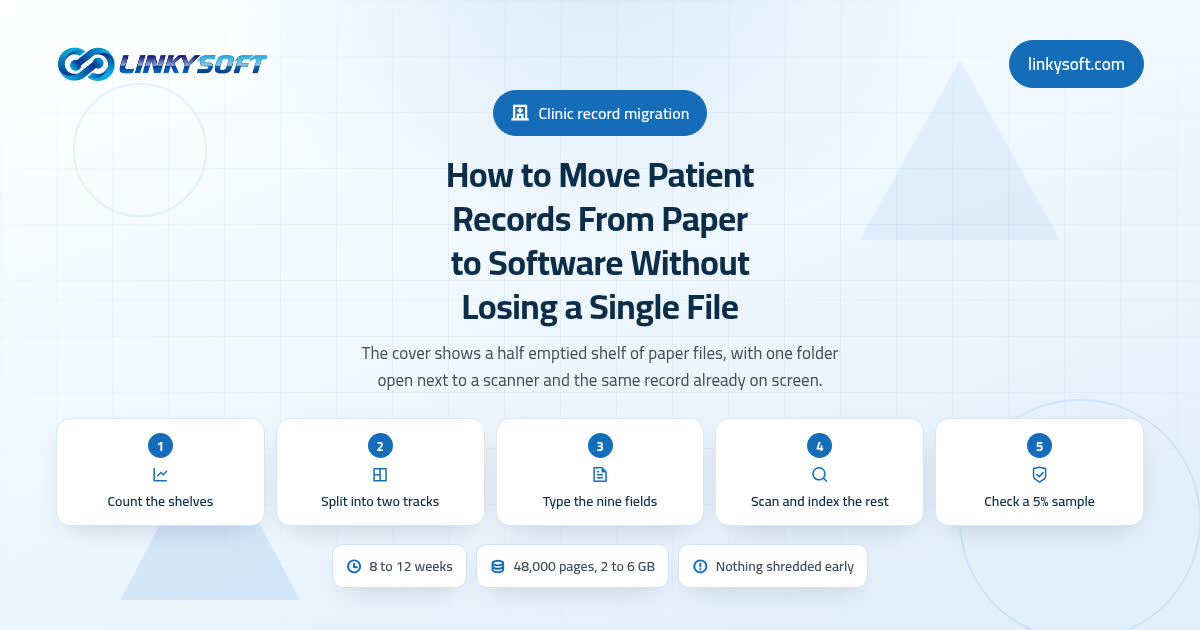
Whole folders almost never vanish in a records migration; what disappears is one loose page, an allergy written in a margin, or a phone number that lost its leading zero. This is the field method we use in real clinics: count the shelves first, type in only the patients who are still active, scan and index the rest, then check a 5 percent sample against the paper before a single box is closed.
AI is not just hype — it is quietly changing how real companies handle support, decisions and routine work.
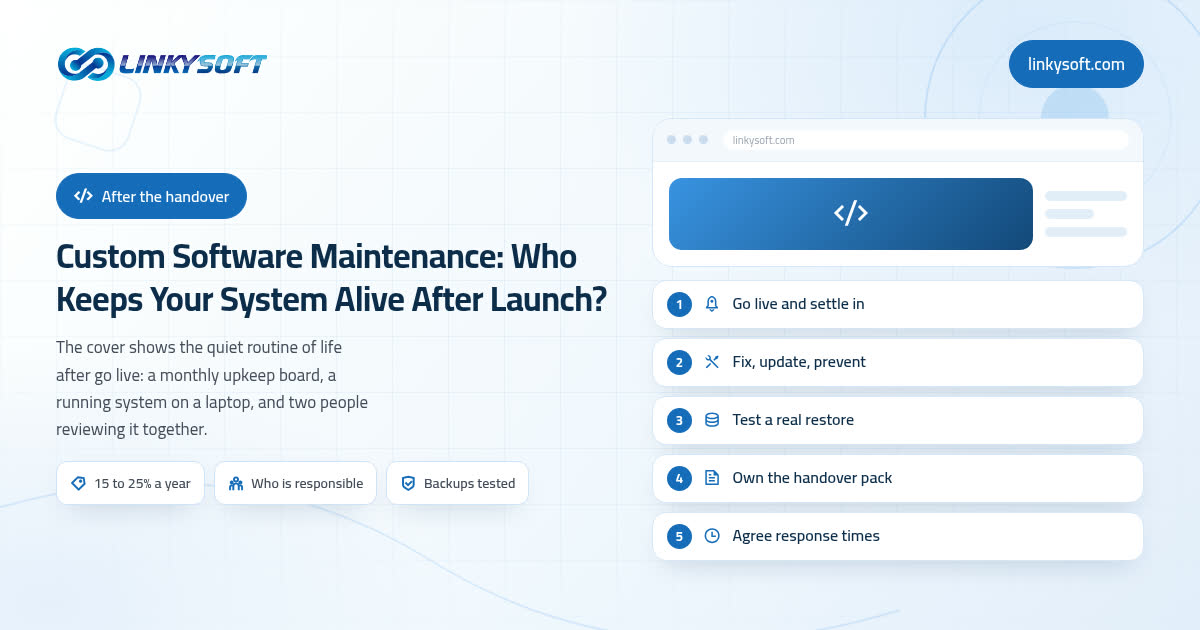
Most articles on this subject stop at "buy a maintenance plan". This one walks through the real twelve months after handover with the hours and the money written out: how noisy the first month is, the four kinds of work that never stop, what a year of care actually costs, and the four honest ways of owning it. It also says plainly where we tell a client to buy less support than we would happily sell them.
Your update has said eighty percent for three months and you have no way to test whether that is true. This article gives you five checks you can run in an afternoon with no technical knowledge, the simple arithmetic that turns finished work into an honest launch date, the real split of effort hiding behind the screens, and the four levers left when you discover you are behind, including the point where stopping is the right answer.