Subject area
Cybersecurity
Security terms every business should know: phishing, ransomware, encryption, two-factor authentication, zero trust, backups and the habits that keep data and accounts safe.
35 concepts in this area
Cybersecurity
A
Authenticator App An authenticator app is a free app on your phone that produces the six-digit code a website asks for after your password, so a stolen password is not enough. Read the definition
B
Backup A backup is a second copy of your files, kept somewhere safe from whatever destroys the first copy, so you can get your work back. Read the definition
C
Cyber Insurance Cyber insurance is a policy that pays for the clean-up after an attack, as long as you kept the security promises you made on the application form. Read the definition
D
Data Breach A data breach is the moment private customer information leaves your control, whether a thief took it or someone simply sent it to the wrong address. Read the definition Disaster Recovery Plan DRP A disaster recovery plan is a short written document that says exactly what your business does, and who does it, on the morning the systems stop working. Read the definition
E
Encryption Encryption is a way of scrambling your information into nonsense, so that only the person holding the right key can read it again. Read the definition End-of-Life Software EOL End-of-life software is a program its maker has stopped repairing, so any weakness someone finds in it from that day on stays open forever. Read the definition Ethical Hacking Ethical hacking is an attack on your own system that you asked for and paid for, so a trusted expert finds the holes before a criminal does. Read the definition
G
GDPR GDPR GDPR is the European law that sets out how a business may collect, keep and use the personal information of the people it serves. Read the definition
H
HTTPS HTTPS is the protected version of a web address, and it scrambles everything sent between a visitor's browser and your site so nobody in between can read it. Read the definition
I
Invoice Fraud Invoice fraud is a fake or altered supplier bill that gets you to pay a real amount into a bank account the criminal controls. Read the definition
J
Jailbroken Device A jailbroken device is a phone whose built-in protections have been removed on purpose, which lets one app read what another app keeps private. Read the definition
K
Keylogger A keylogger is a hidden program that records every key someone types on a computer, including the password to the company bank account. Read the definition
L
Least Privilege Least privilege means each person can open only the screens their own job needs, so a stolen account cannot reach the rest of the business. Read the definition
M
Malware Malware is any program written to damage your computer or to work quietly for someone else while you carry on using it. Read the definition
O
Offboarding Offboarding is the security work a business does when someone leaves, closing every login and shared password they had so nothing stays open behind them. Read the definition OWASP Top 10 The OWASP Top 10 is a free list of the ten mistakes that most often let a stranger into a website or a web application. Read the definition
P
Password Manager A password manager is a small program that remembers every password for you and keeps them locked away, leaving you just one to memorise. Read the definition Patch Management Patch management is the habit of updating every program and device you use on a set plan instead of whenever someone remembers. Read the definition PCI Compliance PCI DSS PCI compliance is the set of safety rules that the card companies make every business follow before it is allowed to take card payments. Read the definition Phishing Phishing is a message built to look like it came from someone you trust, so that you hand over a password, a code or a payment. Read the definition
Q
QR Code Phishing (Quishing) QR code phishing, also called quishing, is a scam where a fake code is stuck over a real one so your phone opens a fake payment page. Read the definition
R
Ransomware Ransomware is a program that locks every file on a company's computers and then demands a payment before it will hand them back. Read the definition
S
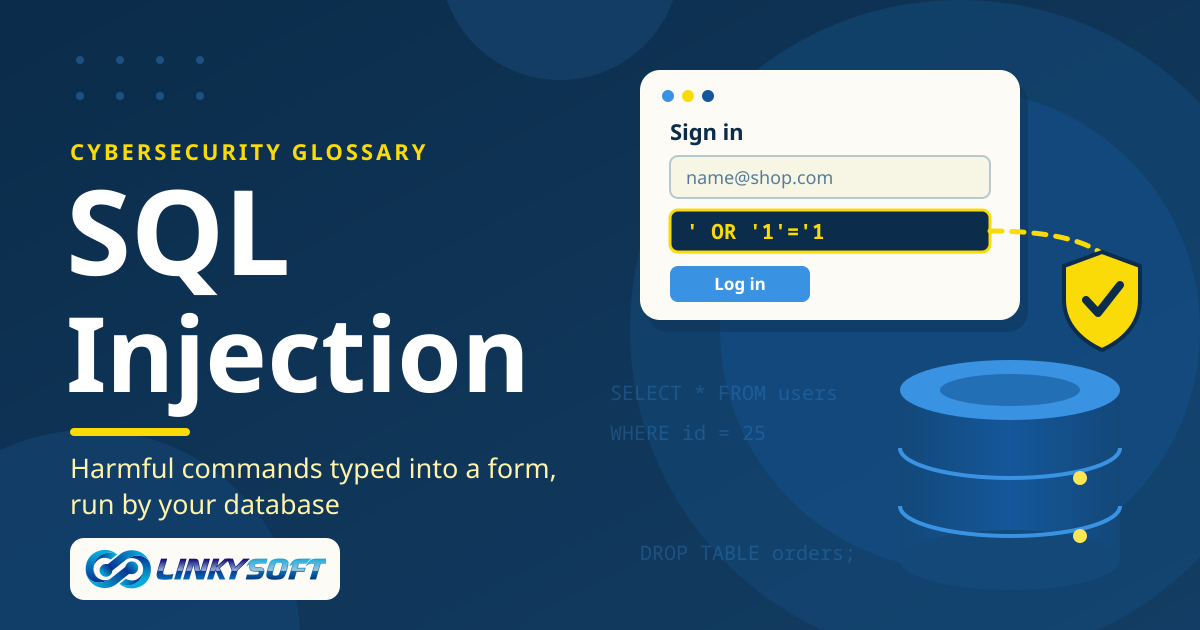
Security Awareness Training Security awareness training is the short, regular practice that teaches your staff to spot a fake email or phone call before they act on it. Read the definition SIM Swap Fraud SIM swap fraud is a scam in which a criminal moves your phone number onto their own SIM card, so your calls and security codes reach them instead. Read the definition Social Engineering Social engineering is an attack on the person rather than the computer, where someone uses fear or hurry to talk you into handing over a code or a payment. Read the definition SQL Injection SQLi A web attack where someone types database commands into a form or a web address, so the website runs them and reveals, changes or deletes data it should protect. Read the definition
T
Third-Party Risk Third-party risk is the chance that your data leaks through a supplier, a freelancer or a plugin you trusted, rather than through your own team. Read the definition Two-Factor Authentication 2FA Two-factor authentication is a sign-in that asks for your password and then for something you are holding, so a stolen password alone is not enough to get in. Read the definition
U
User Access Review A user access review is a regular check of who can still log into your systems, including the accounts nobody remembers creating. Read the definition
V
Virtual Private Network VPN A virtual private network is a sealed tunnel through a public connection, so what your staff send on café or hotel wifi cannot be read by anyone nearby. Read the definition Vulnerability Scan A vulnerability scan is an automatic check that searches a website or an app for weaknesses attackers already know about and reports what it finds. Read the definition
W
Web Application Firewall WAF A web application firewall is a filter that reads every request arriving at your website and blocks the ones that look like a known attack. Read the definition
Z
Zero Trust Zero trust is a way of working where nobody is trusted just for sitting inside the office, and every single login is checked again. Read the definition Zero-Day Vulnerability A zero-day vulnerability is a hole in software that has just been found and has no fix yet, so everyone using that part is exposed until one arrives. Read the definition
Other subject areas
Web Hosting Plain definitions of the web hosting words you meet when you put a website online: uptime, service level agreements, storage, SSL and the parts of a hosting plan that decide how fast and reliable a site is. 2 Servers What servers and the databases on them do, in plain words: VPS and dedicated machines, MySQL, PostgreSQL, MongoDB, Redis and the terms you need when you run your own server. 4 Domains Domain names made simple: registration, DNS, nameservers, renewals, transfers and the words you need to choose, connect and protect your website's address. 0 E-commerce The language of selling online: SKUs, product variants, abandoned carts, order tracking, payments, point of sale and the numbers that show how a store is really doing. 30 Cloud Computing Cloud computing and the tools that ship software to it: what the cloud is, how Docker and Kubernetes run applications, and how Git and CI/CD keep releases safe. 5 Social Media Social media terms for businesses: WhatsApp marketing, influencer campaigns, video ads and the words behind growing an audience and talking to customers where they already are. 3 Websites The building blocks of a website in plain words: HTML, CSS, responsive design, right-to-left layouts and how a website differs from a web application. 6 Web Applications Terms you meet when a company builds or buys a web application: APIs, dashboards, user roles, single sign-on, deployment, scalability and the cost of owning software. 29 Mobile Apps Mobile app words explained: native and hybrid apps, push notifications, in-app purchases, app store review, offline sync and what keeps an app updated and secure. 25 Digital Marketing Digital marketing terms explained: conversion rate, landing pages, sales funnels, email campaigns, pay per click, attribution and the numbers that show what really works. 26 Artificial Intelligence Artificial intelligence in plain words: machine learning, large language models, chatbots and how businesses use AI to answer customers and automate everyday work. 4 Internet of Things Internet of Things terms made simple: connected devices, sensors, gateways and the words behind smart buildings, tracking and machines that report their own status. 0 Programming Languages Short, clear definitions of the programming languages behind today's software: Python, PHP, JavaScript, TypeScript, Java, Go, Rust, Kotlin, Swift, SQL and more. 12 Frameworks The frameworks developers build on, defined plainly: Laravel, Django, React, Next.js, Node.js, Flutter and what each one brings to a web or mobile project. 6 Search Engines Search engine terms explained: SEO, indexing, sitemaps, canonical URLs, featured snippets, search intent and what helps a website appear in Google and AI answers. 30 User Interfaces User interface and experience terms: prototypes, user experience, dark mode and the design choices that make software and websites easy and pleasant to use. 3