How to Choose Web Design Company Partners for Your Business
A practical guide helping business owners evaluate developer portfolios, verify contract terms, test hosting speed, and choose the right technical partner.
1 minute read
261 articles
A practical guide helping business owners evaluate developer portfolios, verify contract terms, test hosting speed, and choose the right technical partner.
This practical guide shows how salon and gym management software replaces paper diaries, prevents scheduling clashes, and tracks member check-ins accurately. Learn how to stop missed bookings, handle staff commissions cleanly, and manage retail inventory across your daily operations.
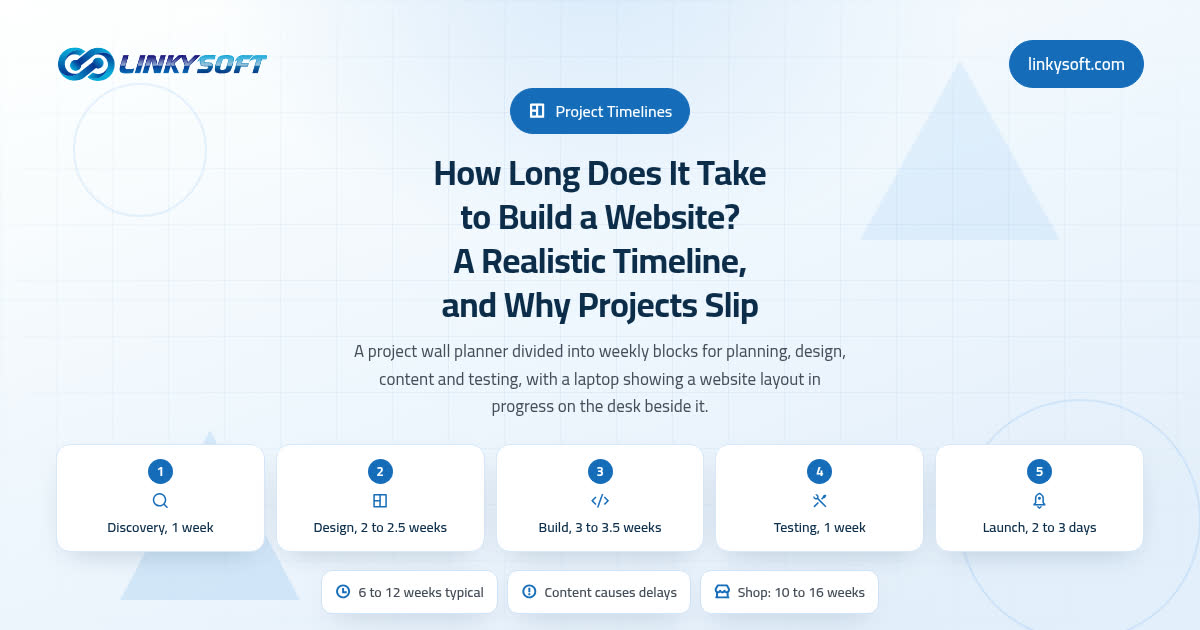
Most timeline articles hand you a range and stop there. This one shows you where every week of a website project actually goes, names the four things behind almost every delay, and puts a cost in days on each of them. Read it before you sign anything, because it will tell you whether the date you have been quoted is a real plan or a hopeful one.
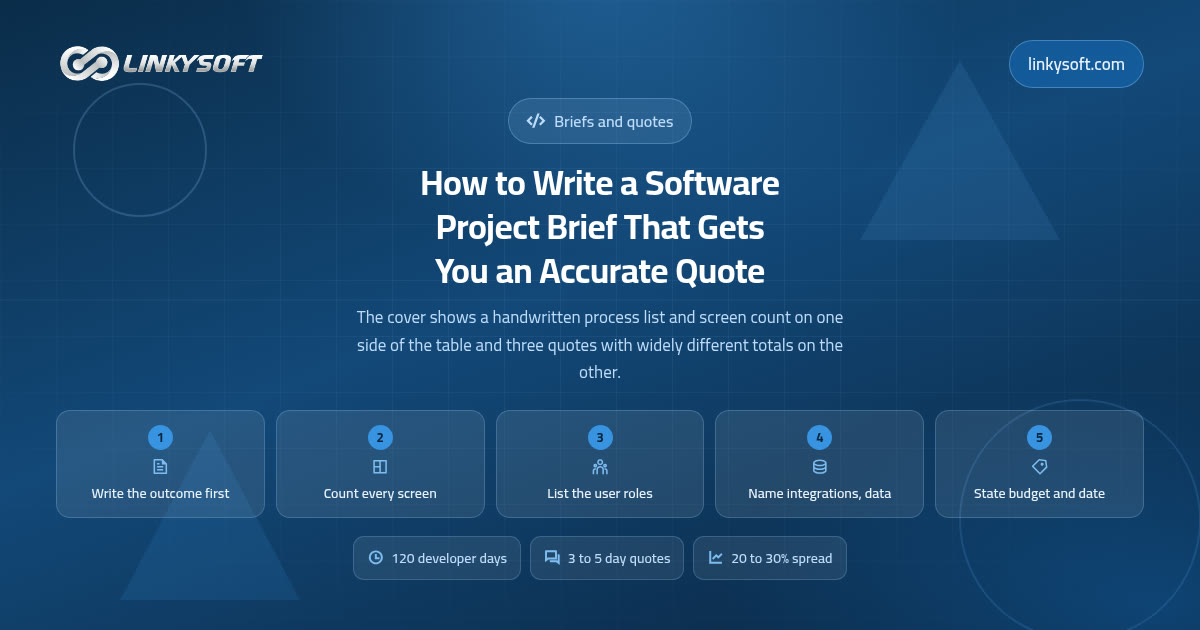
Most guides hand you a list of headings and wish you luck. This one shows you how each sentence you write turns into developer days and money: the screen rates we estimate with, what a second user role really costs, why one line about an integration can outweigh a month of work, and the arithmetic that lets you price your own project to within about 30 percent before anybody quotes you.
Upgrading legacy business databases into modern cloud systems prevents costly system crashes, improves decision-making speed, and secures sensitive records.
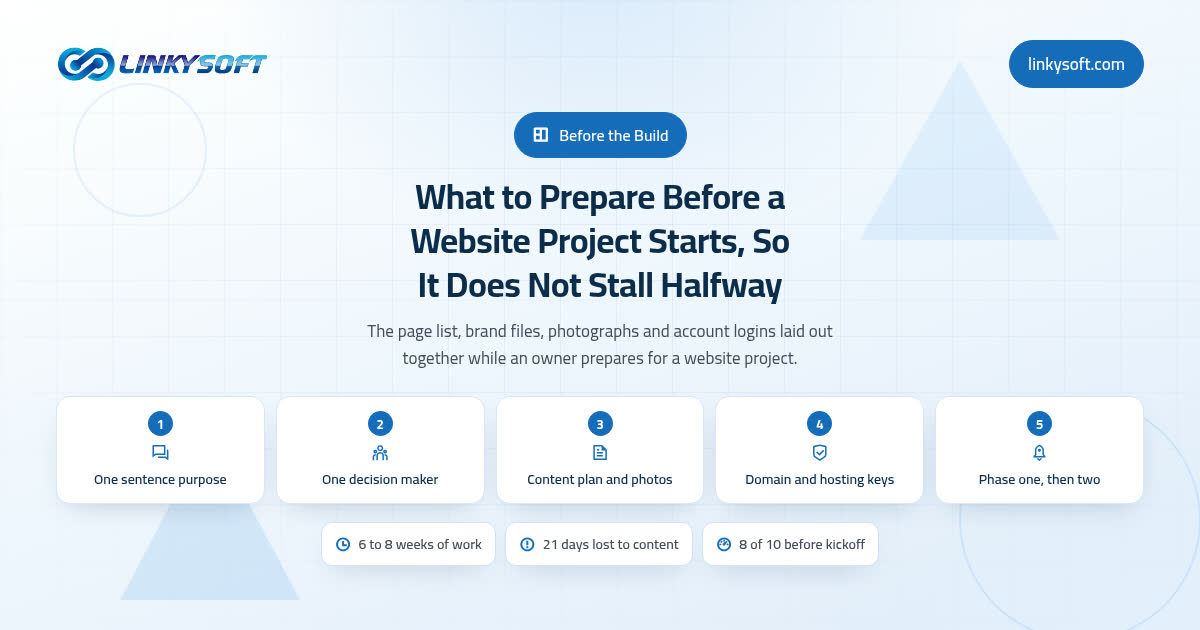
The build work inside a small business website comes to 6 to 8 weeks, yet a troubled project shows 4 or 5 months on the calendar, and nearly all of that gap is waiting rather than working. This guide puts a price in working days on every missing item, from text that never arrives to a domain login nobody can find, and ends with the ten question checklist worth finishing before anyone quotes you a date.
Almost every page answering this question hides behind the words it depends, so this one does the opposite. Here are the real price bands, a typical quote taken apart line by line, the arithmetic behind every driver that lifts a number, the bill that arrives every year after launch, and an honest account of the times when the cheaper option is the one we would tell you to take.
A well-built chatbot answers instantly around the clock and frees your team for the questions that need a human.
Whole folders almost never vanish in a records migration; what disappears is one loose page, an allergy written in a margin, or a phone number that lost its leading zero. This is the field method we use in real clinics: count the shelves first, type in only the patients who are still active, scan and index the rest, then check a 5 percent sample against the paper before a single box is closed.
Most articles on this subject stop at "buy a maintenance plan". This one walks through the real twelve months after handover with the hours and the money written out: how noisy the first month is, the four kinds of work that never stop, what a year of care actually costs, and the four honest ways of owning it. It also says plainly where we tell a client to buy less support than we would happily sell them.
Most of your visitors are on phones. A site that breaks on small screens loses them — and loses ranking too.
Your update has said eighty percent for three months and you have no way to test whether that is true. This article gives you five checks you can run in an afternoon with no technical knowledge, the simple arithmetic that turns finished work into an honest launch date, the real split of effort hiding behind the screens, and the four levers left when you discover you are behind, including the point where stopping is the right answer.
I'll help you with anything you want to do.
Pick a topic and ask me anything about it.
There are no topics to ask about right now.
Talk to a human
Talk to a human