How Much Does a Mobile App Cost — and What Drives the Price?
There is no single price tag. Understanding the cost drivers helps you scope smartly and avoid nasty surprises.
1 minute read
257 articles
There is no single price tag. Understanding the cost drivers helps you scope smartly and avoid nasty surprises.
A successful app follows a clear path from discovery to launch. Knowing the stages helps you plan time and budget.
Three businesses ask us this same question in three different ways, and the honest answer is rarely the biggest option. This guide hands you a five minute test built from three questions, the build and running numbers we quote in practice for each choice, and the plain arithmetic that shows when the cheaper option earns more. By the end you will have a decision, a budget and a next step.
Scalability is designed in, not bolted on. These principles keep an app fast as users and data multiply.
Custom is not always the answer — but when your workflow is your edge, a tailored app beats any template.
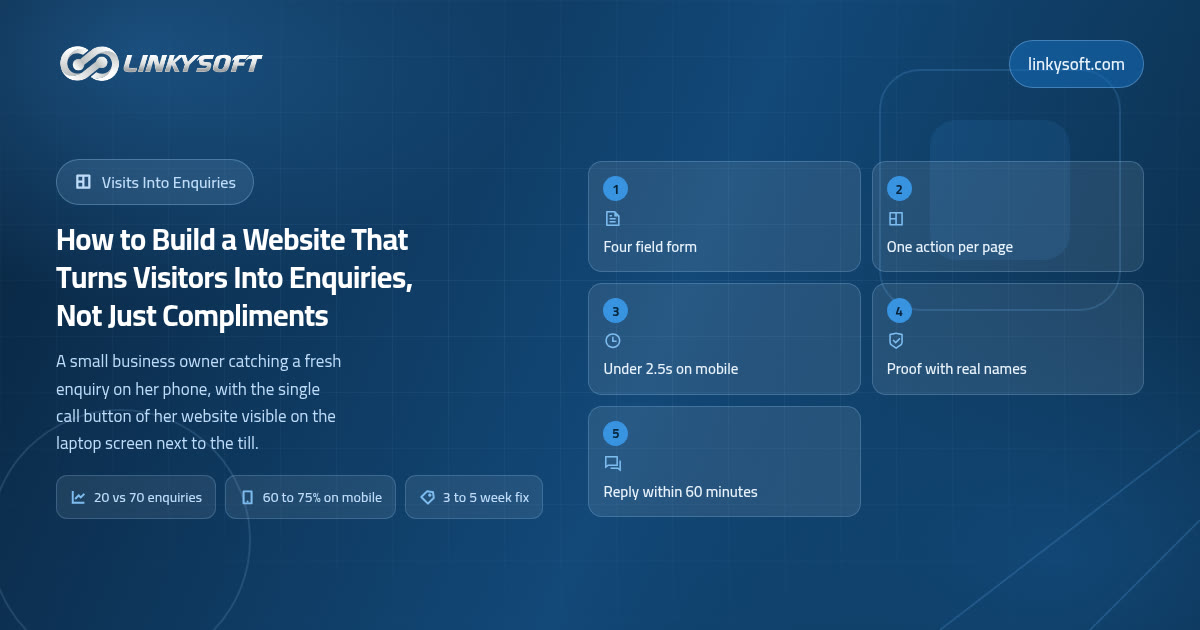
Your new site got compliments and the enquiry inbox barely moved, which is a specific problem with a specific fix. This is the arithmetic of your own website in three numbers you can find in an afternoon, the five changes we make for real clients in the order that moves the number, and an honest account of when repairing five pages beats paying for a full rebuild.
A dashboard crowded with vanity metrics hides the truth. These are the numbers that drive real decisions.
Most guides to this decision hand you a polite checklist and leave you no wiser when you are actually sitting across the table. This one does the opposite. Here are the exact questions to ask a web design company, the answers that should make you pause, the arithmetic behind a US$2,000 quote against a US$12,000 one, the timeline you can hold anyone to, and an honest account of when the cheapest option is the right one.
Most owners are sold a shape before anybody asks how many things they actually sell, so here is the arithmetic we use with clients instead: how many addresses a search engine gets to rank, what each extra page really adds to the bill and the calendar, what a single page quietly hides from your own numbers, and a five question test that reaches an answer in ten minutes, including the many times the honest answer is the cheaper one page site.
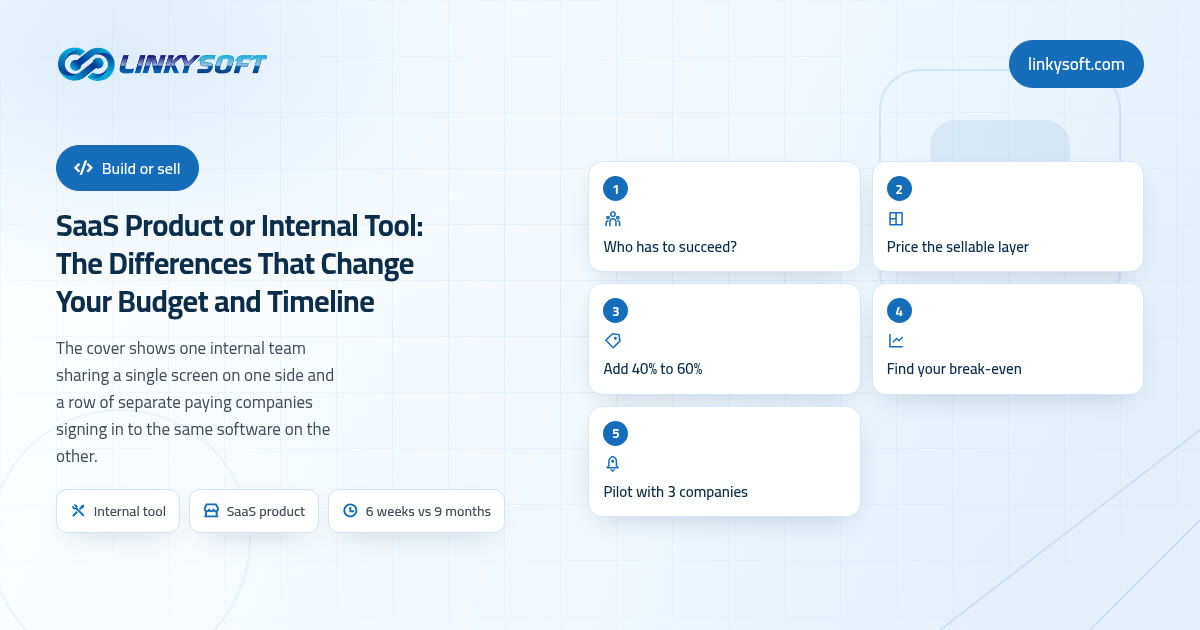
Most comparisons of these two paths stop at a feature list, so this one hands you the arithmetic we actually run with clients instead: what the sellable layer adds on top of the very same screens, what each path costs to run every month, how many paying customers it takes to break even, and the honest cases where buying something ready-made, or simply keeping the tool internal, is the smarter purchase.
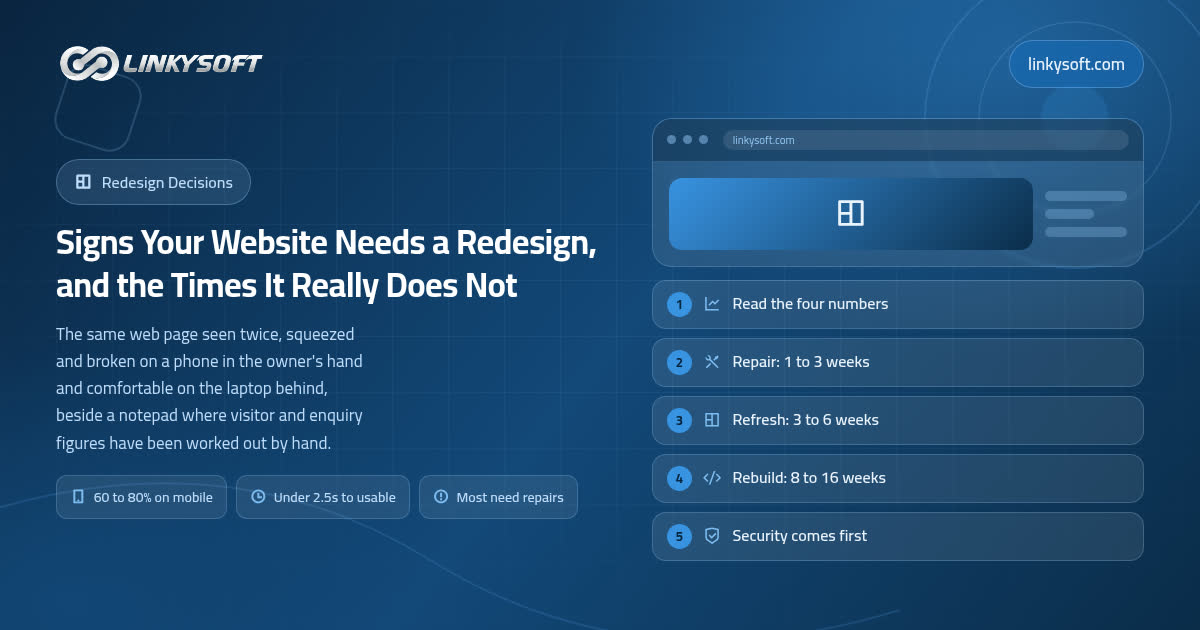
Most articles on this question are written by people who sell redesigns, so they list ten symptoms and conclude that you need one. This is the honest version: the four numbers on your own dashboard that settle the argument, the seven symptoms that really do mean rebuild, the five complaints that almost never do, and the cheaper repairs that fix the same problem for a fraction of the money.
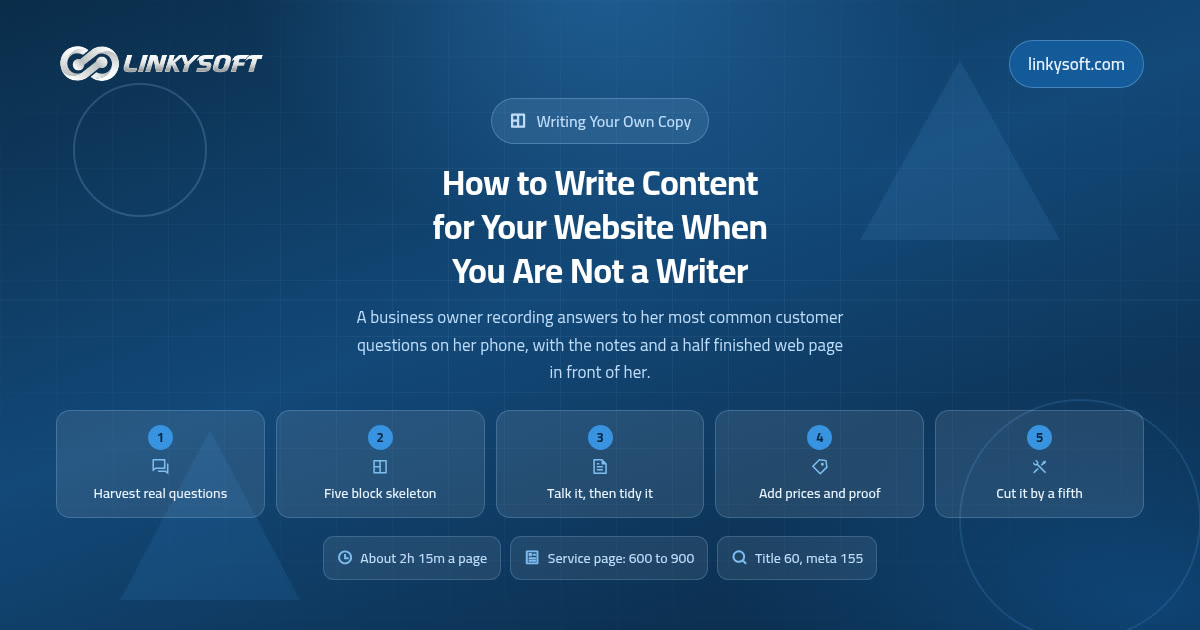
Missing text, not design, is what usually holds a website up. This guide skips the vague advice and hands over the working parts: where to find the words you already own in your own inbox, the order to write your pages in, how long each one should be, a five block skeleton that turns a blank screen into a draft, a recording method that gets a page drafted in about an hour and a half once the questions are collected, and the arithmetic of when to pay a writer instead.