How Modern Data Systems Help Businesses
Discover how updating your company data systems improves decision speed, protects files, and cuts operational costs.
1 minute read
51 articles
Discover how updating your company data systems improves decision speed, protects files, and cuts operational costs.
An architectural roadmap for technical leaders transitioning from legacy relational databases to open lakehouses, real-time streaming, and vector-enabled data platforms.
Sorting, tagging, summarising, data entry — AI excels at the dull work that drains skilled people.
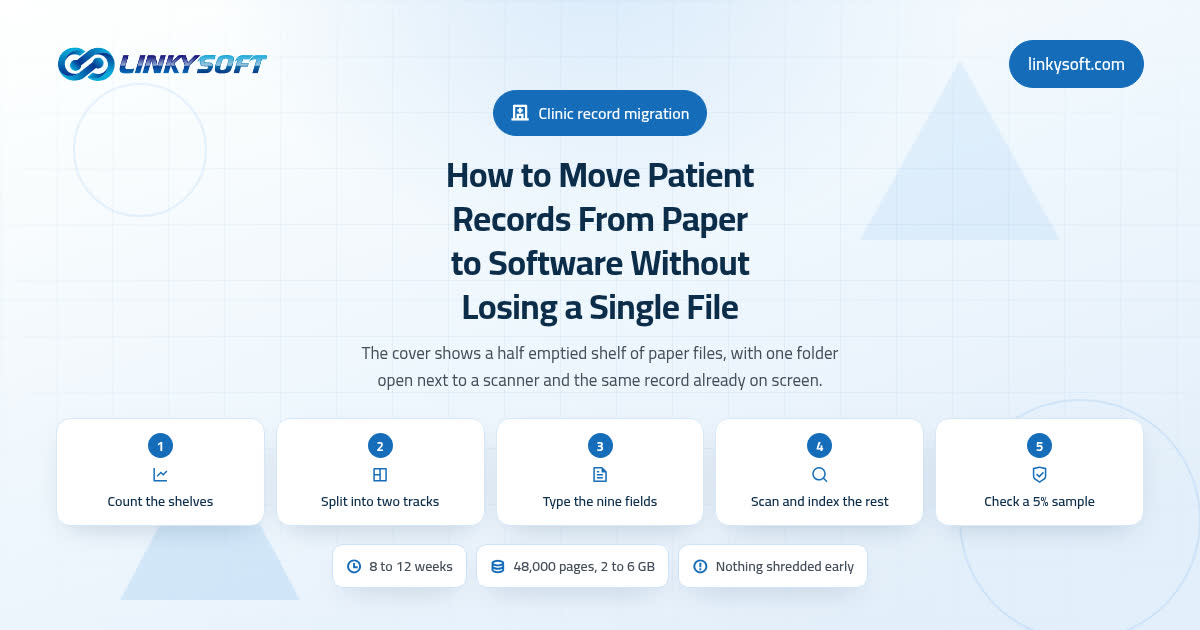
Whole folders almost never vanish in a records migration; what disappears is one loose page, an allergy written in a margin, or a phone number that lost its leading zero. This is the field method we use in real clinics: count the shelves first, type in only the patients who are still active, scan and index the rest, then check a 5 percent sample against the paper before a single box is closed.
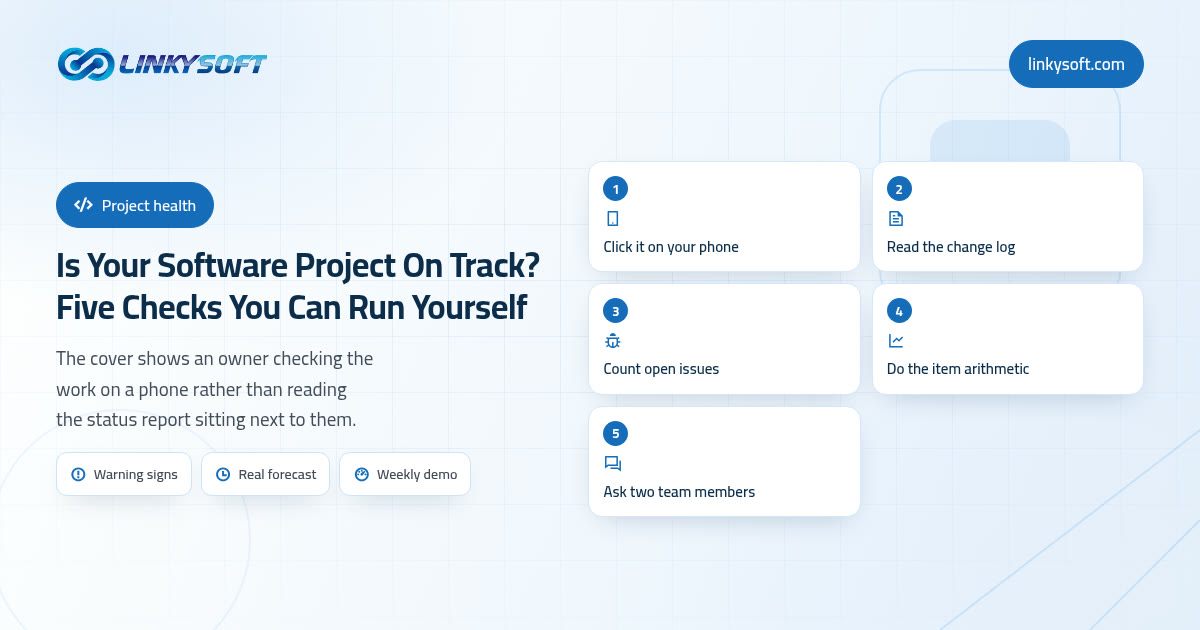
Your update has said eighty percent for three months and you have no way to test whether that is true. This article gives you five checks you can run in an afternoon with no technical knowledge, the simple arithmetic that turns finished work into an honest launch date, the real split of effort hiding behind the screens, and the four levers left when you discover you are behind, including the point where stopping is the right answer.
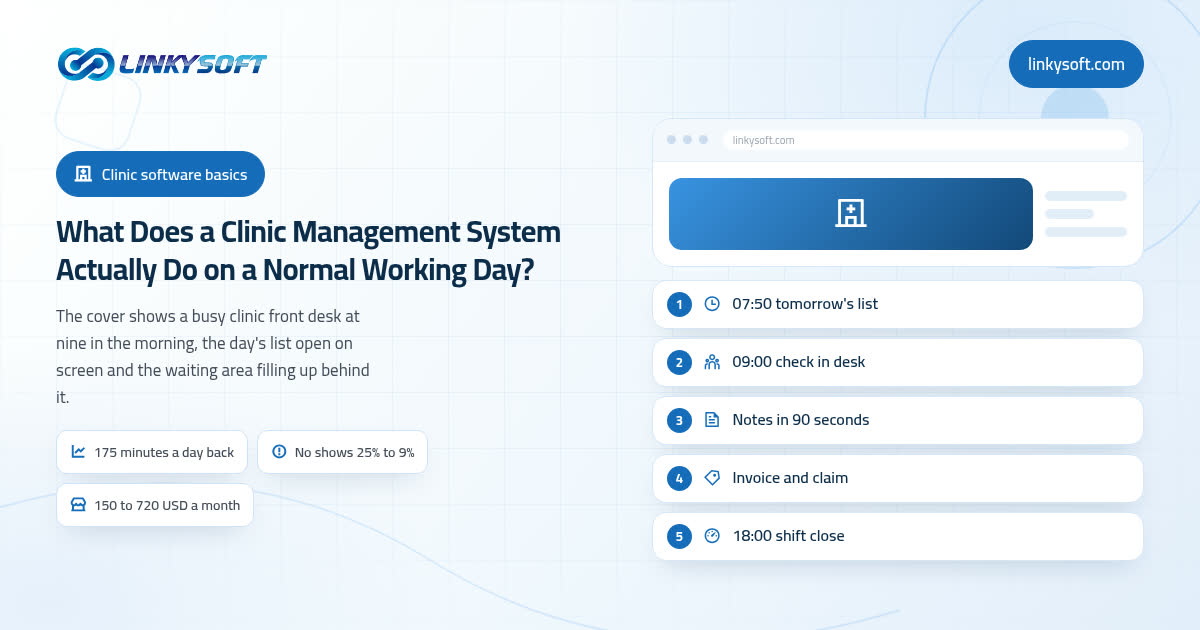
Most clinic software is sold as a list of features, which tells you very little about whether it is worth the money. So instead of a feature list, we walk through one ordinary Tuesday in a clinic with four doctors and forty booked visits, from the day list at 07:50 to the shift close at 18:00, showing the minutes and the money each part gives back, and saying plainly where a small clinic should buy the cheap ready made product rather than build anything.
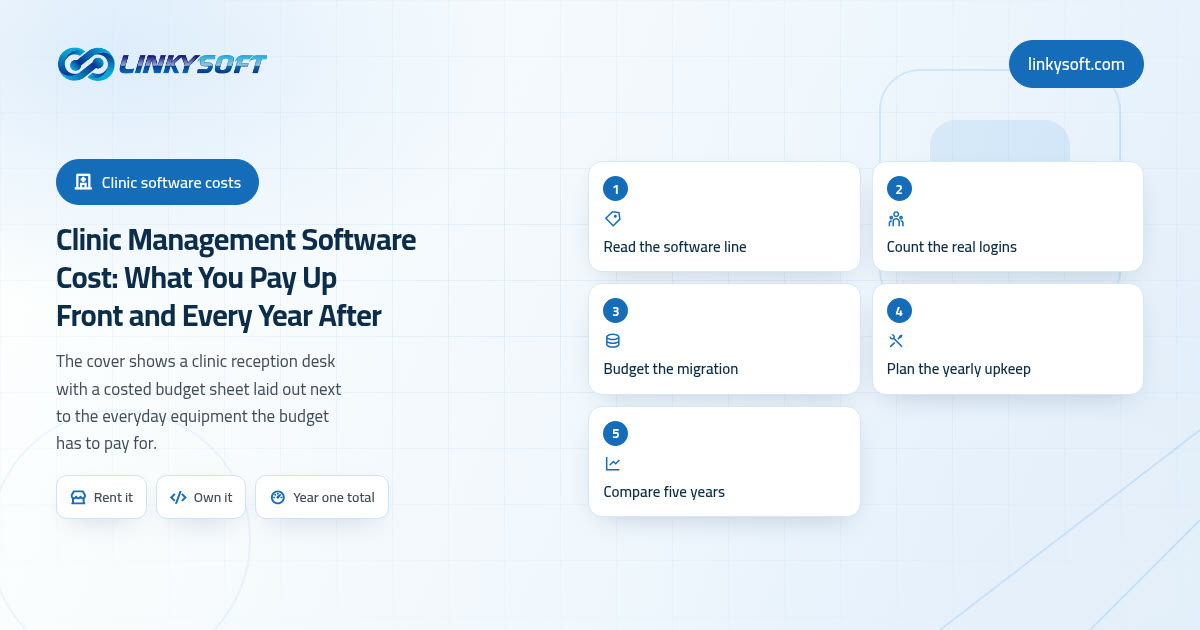
Most articles on this question quote one vendor's licence price and stop there. This one builds the whole bill a clinic actually signs: the software line, the migration, the training, the hardware on the desks, and the running costs that arrive every year after go live. It also runs the five year arithmetic for renting against owning at eight users and at forty, and says honestly where a custom build stops paying for itself.
Repetitive approvals, data entry and reports drain your team. Here is a practical path to automating them without chaos.
Most guides to this decision hand you a polite checklist and leave you no wiser when you are actually sitting across the table. This one does the opposite. Here are the exact questions to ask a web design company, the answers that should make you pause, the arithmetic behind a US$2,000 quote against a US$12,000 one, the timeline you can hold anyone to, and an honest account of when the cheapest option is the right one.
Most comparisons of these two paths stop at a feature list, so this one hands you the arithmetic we actually run with clients instead: what the sellable layer adds on top of the very same screens, what each path costs to run every month, how many paying customers it takes to break even, and the honest cases where buying something ready-made, or simply keeping the tool internal, is the smarter purchase.
An 18 percent miss rate in a five clinician practice quietly costs around 19,000 US dollars a month, and yet half of those misses are simply forgetting, which is the cheapest problem you will ever fix. This guide separates the misses software genuinely solves from the ones only your scheduling policy can, prices every fix with arithmetic you can check on paper, and says plainly which clinics should spend nothing at all.
Choosing a name for your e-commerce store is one of the most important decisions you'll make, particularly when you're operating in a competitive field like bicycles and sports equipment. The name of your online store will not only influence how potential customers perceive your brand but also impact your marketing efforts, search engine rankings, and overall business success.