How to Choose Web Design Company Partners for Your Business
A practical guide helping business owners evaluate developer portfolios, verify contract terms, test hosting speed, and choose the right technical partner.
1 minute read
Designing websites that earn trust and rank: layout, responsive design, speed and the Core Web Vitals score, from the first wireframe to launch.
A practical guide helping business owners evaluate developer portfolios, verify contract terms, test hosting speed, and choose the right technical partner.
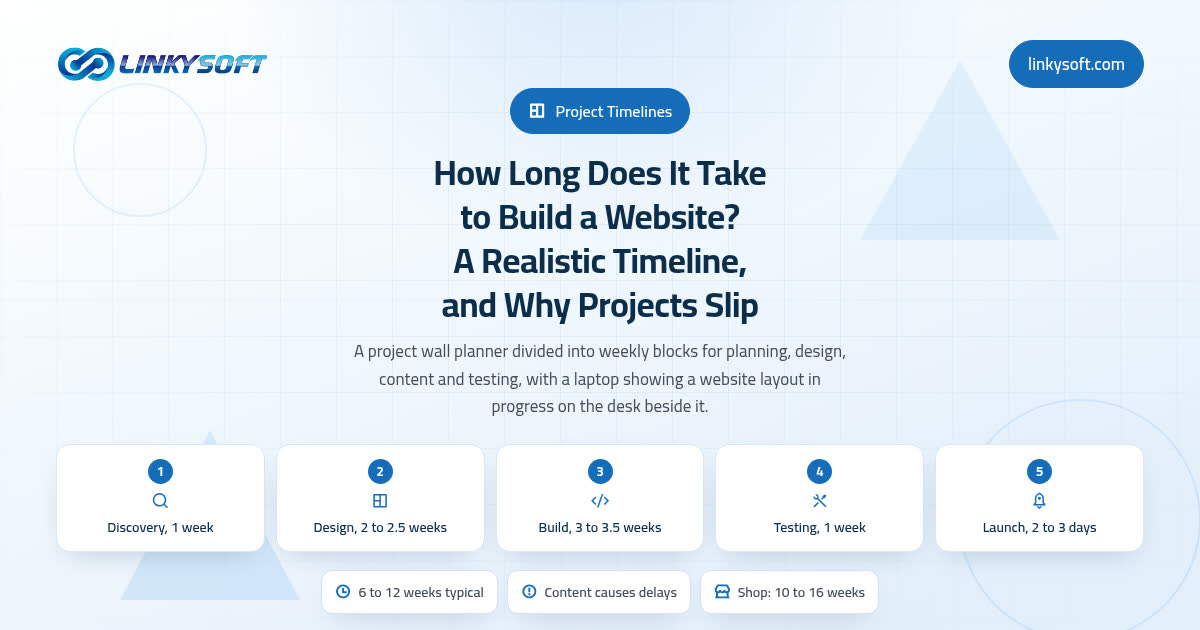
Most timeline articles hand you a range and stop there. This one shows you where every week of a website project actually goes, names the four things behind almost every delay, and puts a cost in days on each of them. Read it before you sign anything, because it will tell you whether the date you have been quoted is a real plan or a hopeful one.
The build work inside a small business website comes to 6 to 8 weeks, yet a troubled project shows 4 or 5 months on the calendar, and nearly all of that gap is waiting rather than working. This guide puts a price in working days on every missing item, from text that never arrives to a domain login nobody can find, and ends with the ten question checklist worth finishing before anyone quotes you a date.
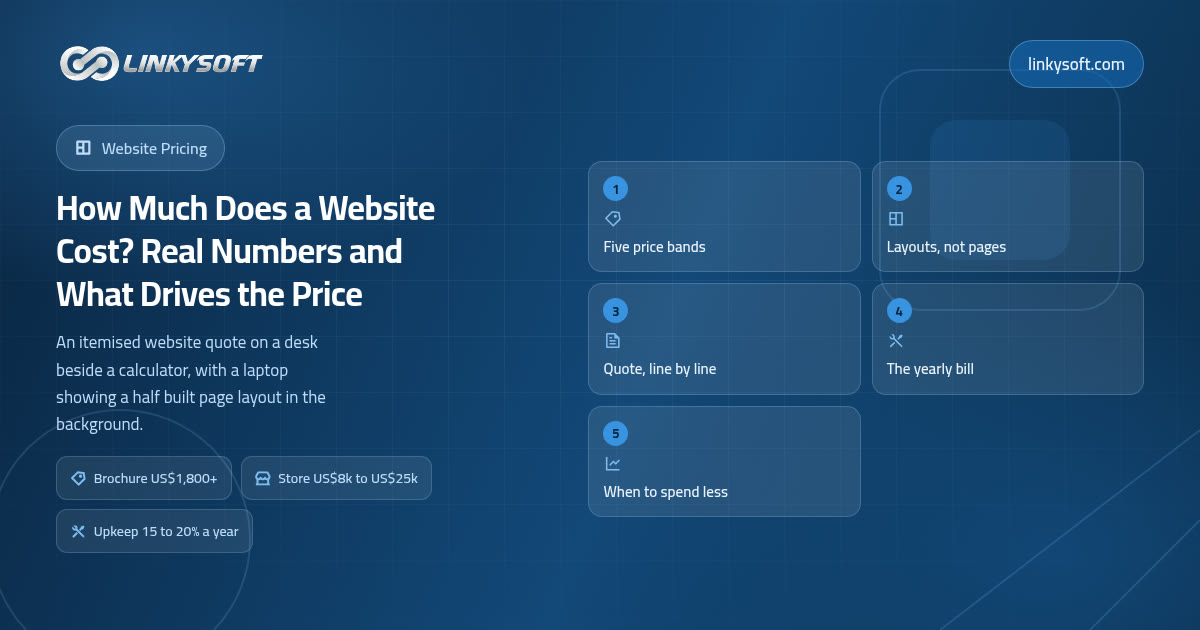
Almost every page answering this question hides behind the words it depends, so this one does the opposite. Here are the real price bands, a typical quote taken apart line by line, the arithmetic behind every driver that lifts a number, the bill that arrives every year after launch, and an honest account of the times when the cheaper option is the one we would tell you to take.
Most of your visitors are on phones. A site that breaks on small screens loses them — and loses ranking too.
Websites are attacked constantly, mostly by bots probing for weak spots. A few layers of defence stop almost all of it.
Slow pages lose visitors and rankings. The good news: most speed problems have well-known, fixable causes.
A modern site is fast, secure, accessible and built to convert — not just pretty. Here is the real checklist.
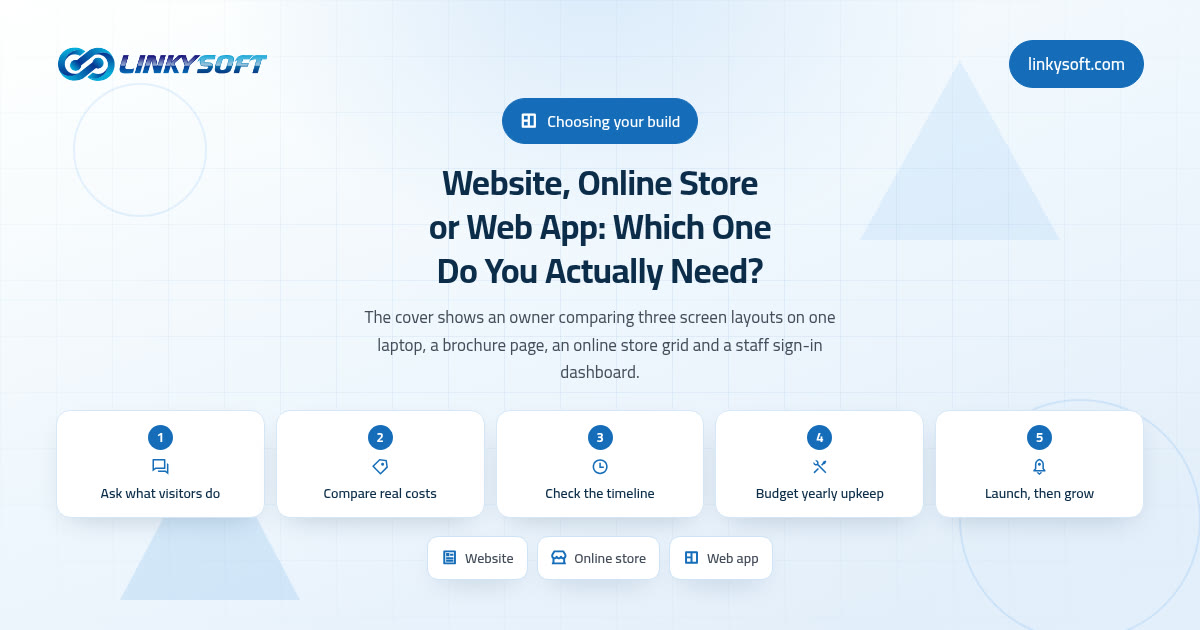
Three businesses ask us this same question in three different ways, and the honest answer is rarely the biggest option. This guide hands you a five minute test built from three questions, the build and running numbers we quote in practice for each choice, and the plain arithmetic that shows when the cheaper option earns more. By the end you will have a decision, a budget and a next step.
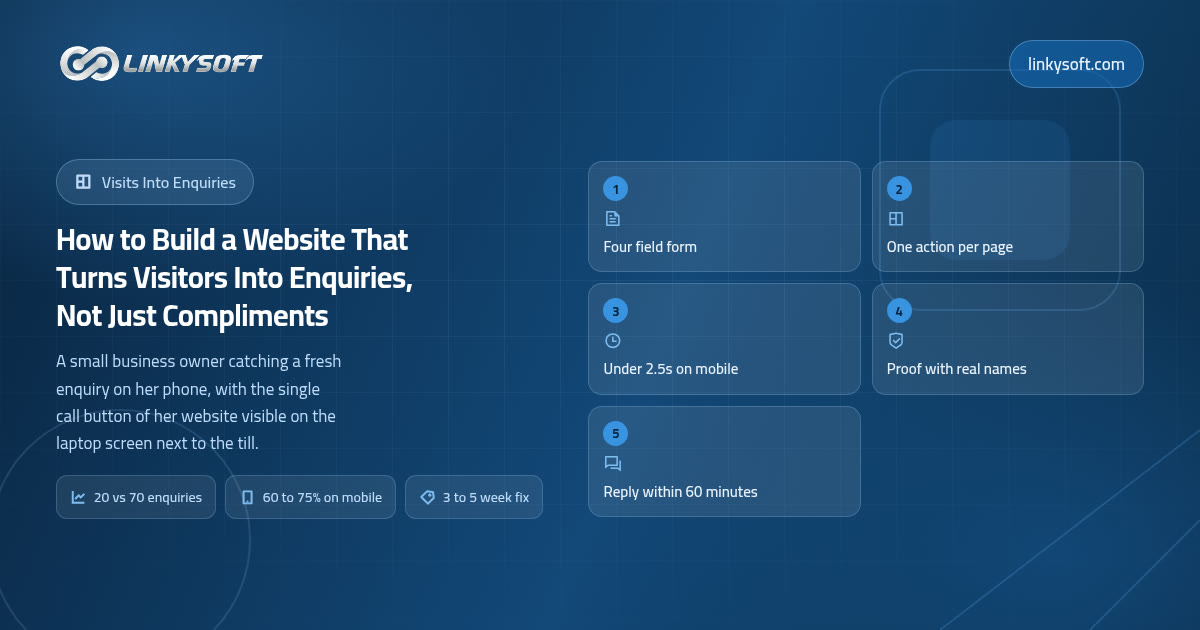
Your new site got compliments and the enquiry inbox barely moved, which is a specific problem with a specific fix. This is the arithmetic of your own website in three numbers you can find in an afternoon, the five changes we make for real clients in the order that moves the number, and an honest account of when repairing five pages beats paying for a full rebuild.
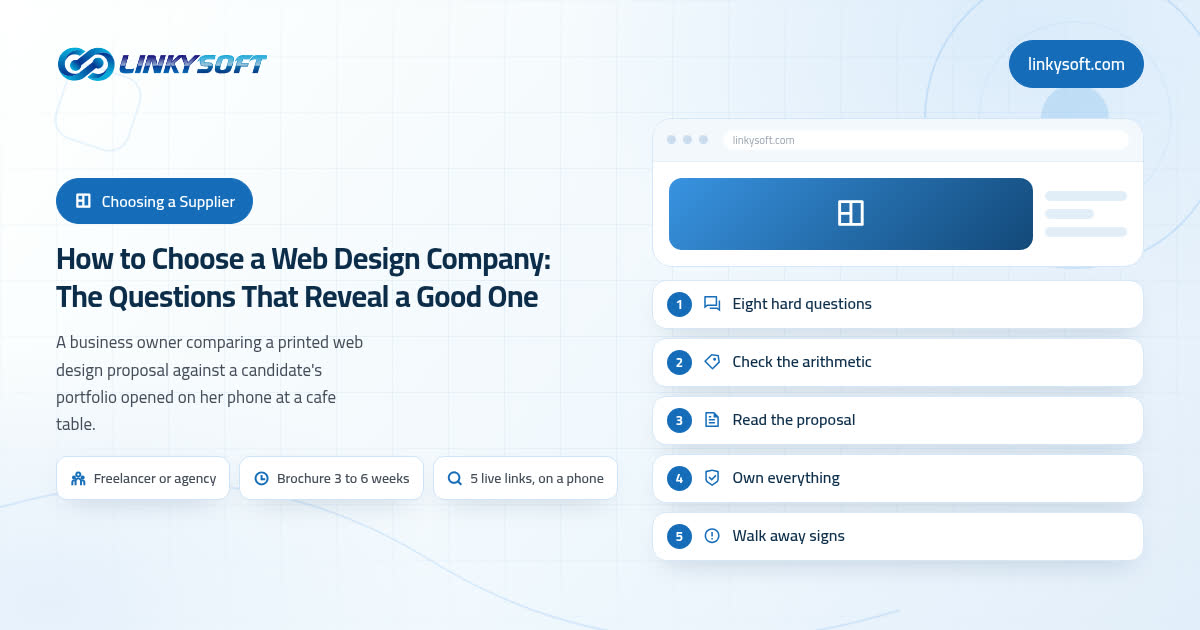
Most guides to this decision hand you a polite checklist and leave you no wiser when you are actually sitting across the table. This one does the opposite. Here are the exact questions to ask a web design company, the answers that should make you pause, the arithmetic behind a US$2,000 quote against a US$12,000 one, the timeline you can hold anyone to, and an honest account of when the cheapest option is the right one.
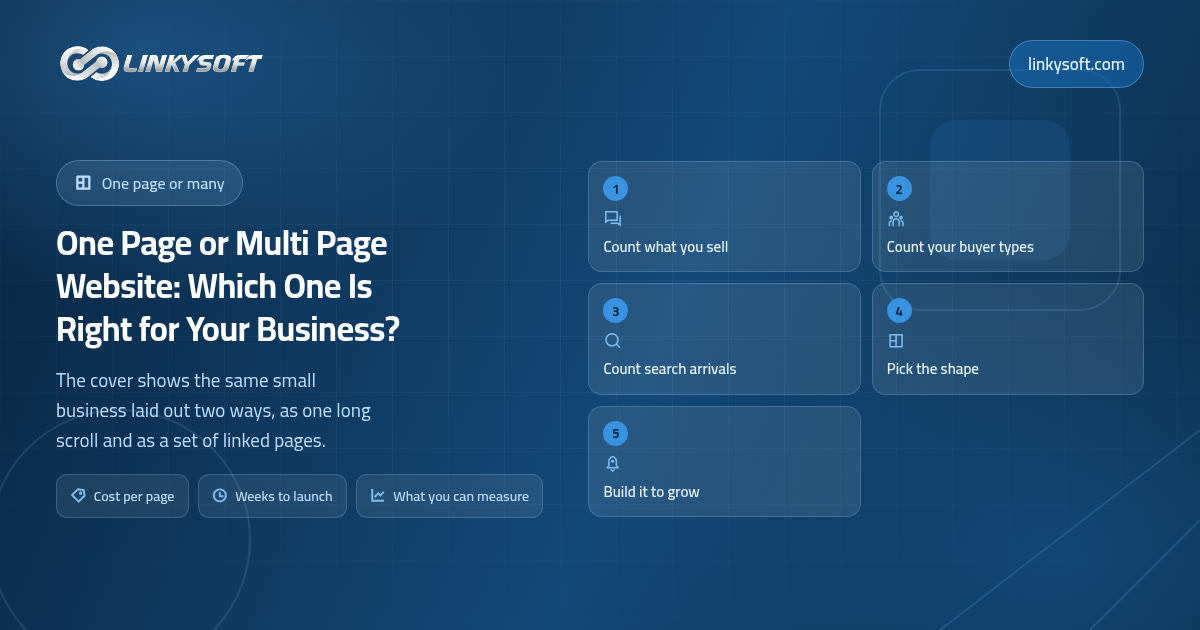
Most owners are sold a shape before anybody asks how many things they actually sell, so here is the arithmetic we use with clients instead: how many addresses a search engine gets to rank, what each extra page really adds to the bill and the calendar, what a single page quietly hides from your own numbers, and a five question test that reaches an answer in ten minutes, including the many times the honest answer is the cheaper one page site.
Quick, clear answers to what readers ask most about this topic.
Website design is the planning of how a website looks, how its pages are laid out and how visitors move through it. Website design covers layout, colours, fonts, images, navigation and how pages adapt to phones. Good website design helps visitors find what they need and trust the business behind the site.
Web design decides how a website looks and how people use it, while web development builds the working site in code. A designer creates layouts, styles and user flows, often in a tool like Figma. A developer turns those designs into HTML, CSS, JavaScript and server code that runs in the browser.
A good business website loads fast, works well on phones, explains clearly what the business offers and makes the next step easy. Visitors should understand who you are and how to contact you within a few seconds. Real photos, customer reviews and visible contact details all build trust.
A business needs a professional website because most customers search online before they call, visit or buy. A website is the one place online the business fully controls, unlike social media pages that follow a platform's rules. A professional website also makes a business look established and helps it appear in Google search results.
Responsive website design is an approach where one website adjusts its layout to fit any screen, from a small phone to a wide desktop monitor. The layout uses flexible grids, flexible images and CSS media queries to rearrange content. Responsive design matters because a large share of web visits now come from phones.
Mobile-first design means designing a website for small phone screens first and then adding layout for larger screens. This forces the designer to focus on the most important content and actions. Google also indexes most sites using the mobile version, so a strong mobile layout matters for search.
Core Web Vitals are three Google measurements of real user experience on a web page: loading, responsiveness and visual stability. They are Largest Contentful Paint, Interaction to Next Paint and Cumulative Layout Shift. Google uses Core Web Vitals as part of its page experience signals in search.
A good Core Web Vitals score means Largest Contentful Paint within 2.5 seconds, Interaction to Next Paint within 200 milliseconds and Cumulative Layout Shift below 0.1. Google measures these values on real visits and looks at the 75th percentile of page loads. A page passes when all three metrics are in the good range.
You can check the speed of your website with free tools like Google PageSpeed Insights, which shows lab results and real visitor data from Chrome users. Google Search Console also has a Core Web Vitals report for the whole site. Lighthouse in Chrome's developer tools gives a detailed list of what slows each page.
Website speed is important because slow pages make visitors leave before they read or buy anything. Speed is also part of Google's page experience signals, so it can affect search visibility. A fast website feels more trustworthy and turns more visitors into customers.
You can make a website load faster by compressing images, using modern formats like WebP or AVIF, and loading only the code each page needs. Good hosting, caching and a content delivery network also cut waiting time. Removing heavy plugins, sliders and unused scripts often brings the biggest gain.
A wireframe is a simple sketch of a web page that shows where content, buttons and images will go, without colours or final design. Wireframes let the team agree on structure and content before spending time on visuals. Changes are much quicker at the wireframe stage than after development.
A simple business website often takes a few weeks to design and build, while a larger custom site can take a few months. The timeline depends on the number of pages, custom features, content readiness and how fast feedback comes back. Missing text and photos are one of the most common causes of delay.
A business website should usually have a home page, an about page, pages for its products or services, a contact page and a privacy policy. Many businesses also add a blog, case studies or a frequently asked questions page. Every page should have one clear purpose and a clear next step for the visitor.
UX design, short for user experience design, is the work of making a website easy and pleasant to use. UX design looks at how visitors find information, how many steps a task takes and where people get confused. Good UX design leads to more completed purchases, sign-ups and contact requests.
UI design is about the visual parts of the interface, while UX design is about the whole experience of using the website. UI covers buttons, colours, typography and spacing. UX covers the structure, the flow between pages and whether visitors can reach their goal easily.
Website design affects SEO through page speed, mobile usability, clear page structure and easy internal navigation. Search engines read headings, links and text, so a design that hides content in images or heavy scripts can hurt rankings. A clean, fast and well-structured design makes it easier for both visitors and search engines to understand each page.
A website builder suits a small business that needs a simple site quickly and has no special features. A custom website suits a business that needs its own design, integrations with its systems, special features or full control over the code. The choice depends on how unique the needs are and how much the site must grow.
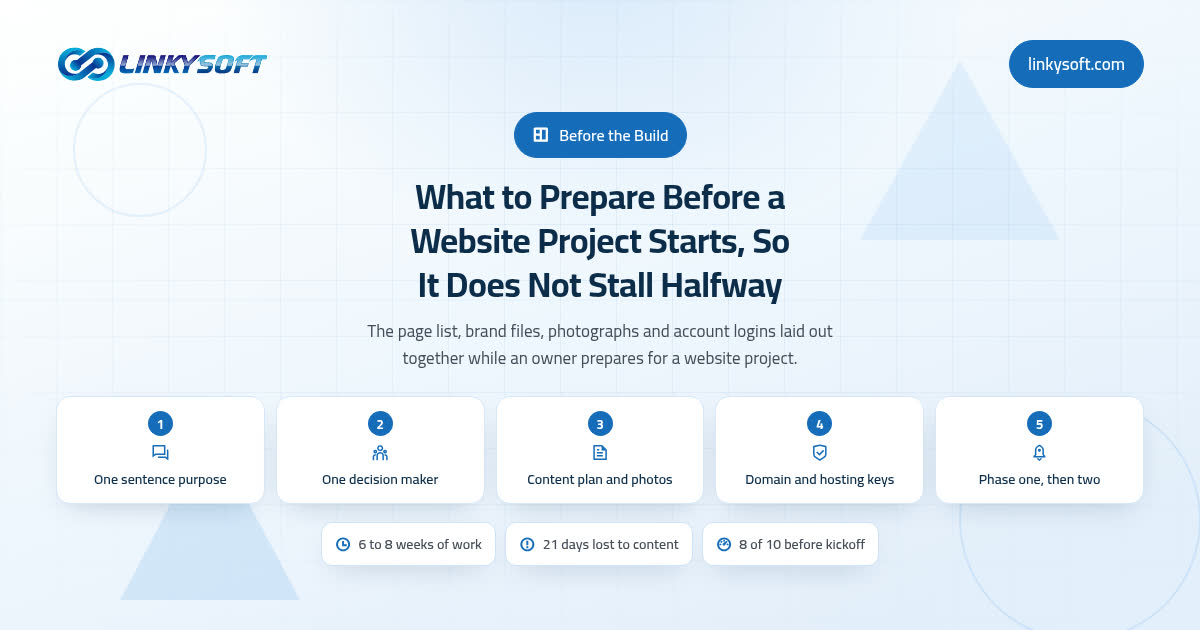
Before starting a website design project, prepare your goals, your target audience, the list of pages, your logo and brand colours, and the text and photos you have. Examples of websites you like and dislike also help the designer understand your taste. Clear content at the start saves weeks of back and forth.
A business should consider a website redesign when the site looks dated, fails on phones, loads slowly or no longer matches what the business offers. Many businesses refresh their websites every few years. Small regular improvements based on visitor data are often better than one large redesign.
Website accessibility means building a website that people with disabilities can use, including those who use screen readers or only a keyboard. It includes enough colour contrast, text alternatives for images, clear labels on forms and logical heading order. The WCAG guidelines are the common standard for website accessibility.
A website needs HTTPS to encrypt the connection between the visitor and the server, so that passwords and form data cannot be read on the way. Browsers mark pages without HTTPS as not secure, which scares visitors away. HTTPS is also a light ranking signal in Google search.
A call to action is a button or link that tells the visitor what to do next, such as Contact us, Book a demo or Start a free trial. Each page should have one main call to action that is easy to see. Clear calls to action turn website visitors into leads and customers.
Yes, one website can support both Arabic and English with a separate version of each page in each language. The Arabic version needs a right-to-left layout, so menus, text and icons flip direction. Each language should have its own URL and hreflang tags so search engines show the right version to each visitor.
Yes, Linkysoft designs and builds websites as part of its full-service work, along with custom web applications, Android and iPhone apps, AI systems and digital marketing. Linkysoft has been building software for companies, institutions and governments since 2007. Custom work at Linkysoft starts with a free consultation.
I'll help you with anything you want to do.
Pick a topic and ask me anything about it.
There are no topics to ask about right now.
Talk to a human
Talk to a human