How to Automate Administrative Workflows and Save Work Hours
Repetitive approvals, data entry and reports drain your team. Here is a practical path to automating them without chaos.
188 articles
Repetitive approvals, data entry and reports drain your team. Here is a practical path to automating them without chaos.
Ready-made software is fast to start but bends your process; custom fits perfectly but takes investment. Here is how to choose.
Understand what ERP software really does, the signs you have outgrown spreadsheets, and how a custom system pays for itself.
Most guides to this decision hand you a polite checklist and leave you no wiser when you are actually sitting across the table. This one does the opposite. Here are the exact questions to ask a web design company, the answers that should make you pause, the arithmetic behind a US$2,000 quote against a US$12,000 one, the timeline you can hold anyone to, and an honest account of when the cheapest option is the right one.
Nearly every article on this subject tells you to buy software in the first paragraph. This one does the opposite: it gives you the actual break points in units, editors and hours, the arithmetic to price your own situation on a calculator, the costs that hide inside an ordinary working week, and a plain statement of when keeping the spreadsheet is still the correct business decision.
Most owners are sold a shape before anybody asks how many things they actually sell, so here is the arithmetic we use with clients instead: how many addresses a search engine gets to rank, what each extra page really adds to the bill and the calendar, what a single page quietly hides from your own numbers, and a five question test that reaches an answer in ten minutes, including the many times the honest answer is the cheaper one page site.
Most comparisons of these two paths stop at a feature list, so this one hands you the arithmetic we actually run with clients instead: what the sellable layer adds on top of the very same screens, what each path costs to run every month, how many paying customers it takes to break even, and the honest cases where buying something ready-made, or simply keeping the tool internal, is the smarter purchase.
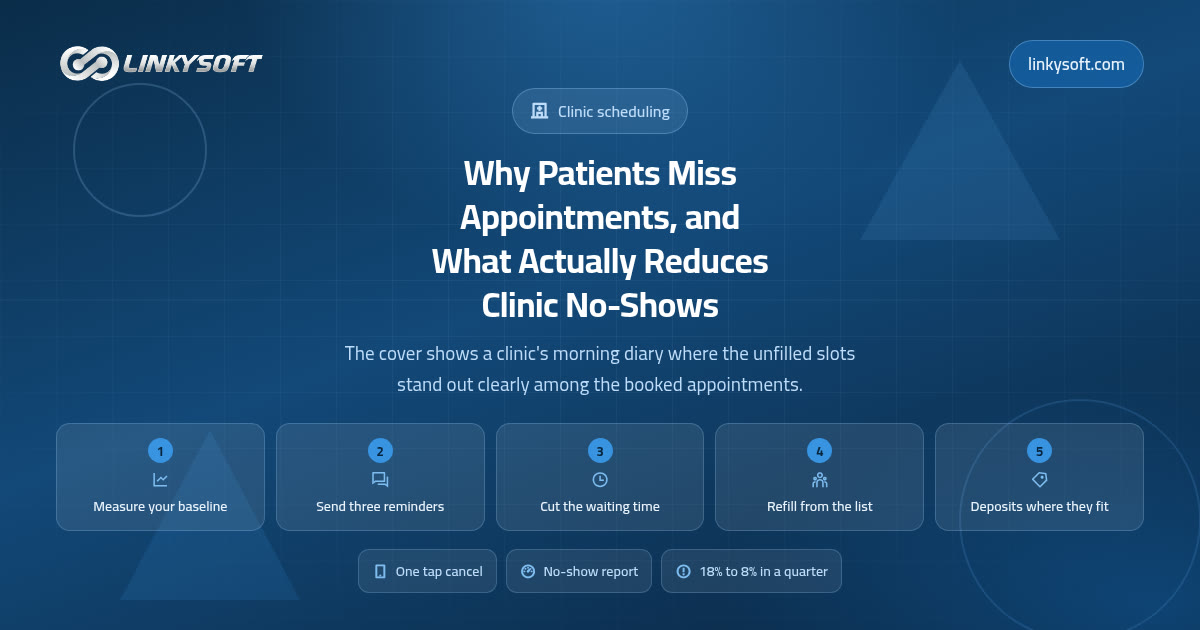
An 18 percent miss rate in a five clinician practice quietly costs around 19,000 US dollars a month, and yet half of those misses are simply forgetting, which is the cheapest problem you will ever fix. This guide separates the misses software genuinely solves from the ones only your scheduling policy can, prices every fix with arithmetic you can check on paper, and says plainly which clinics should spend nothing at all.
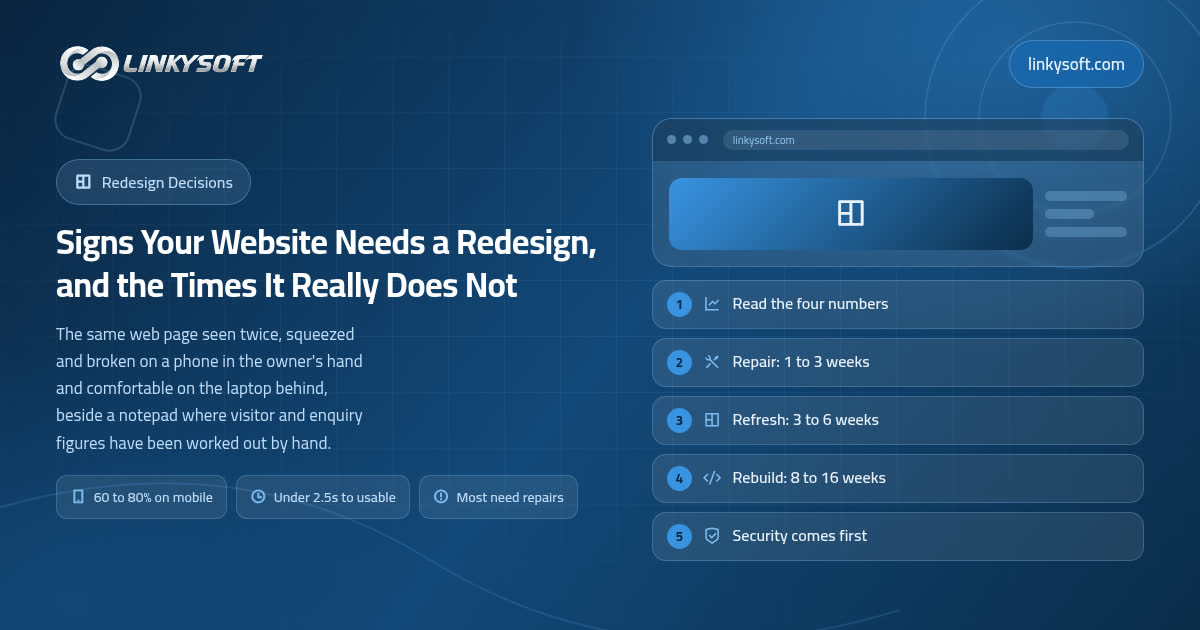
Most articles on this question are written by people who sell redesigns, so they list ten symptoms and conclude that you need one. This is the honest version: the four numbers on your own dashboard that settle the argument, the seven symptoms that really do mean rebuild, the five complaints that almost never do, and the cheaper repairs that fix the same problem for a fraction of the money.
Missing text, not design, is what usually holds a website up. This guide skips the vague advice and hands over the working parts: where to find the words you already own in your own inbox, the order to write your pages in, how long each one should be, a five block skeleton that turns a blank screen into a draft, a recording method that gets a page drafted in about an hour and a half once the questions are collected, and the arithmetic of when to pay a writer instead.
Most owners asking this have already been sold the answer, so here is ours before the detail: about eight in ten businesses need a phone friendly website first and an app later or never. This article settles it with three numbers rather than another feature list, covering how many people really install, what the build and the years after it cost, and how often one customer would open it.
Most articles on this subject list a few vague symptoms and then sell you a build. This one hands you the arithmetic instead: what your spreadsheet really costs per week in hours and money, the row counts and editor numbers where a file genuinely stops coping, a three year comparison you can check on a calculator, and the honest conditions under which we tell a client to keep the sheet and spend the money somewhere better.