What Makes a Professional Website in 2026
A modern site is fast, secure, accessible and built to convert — not just pretty. Here is the real checklist.
1 minute read
267 articles
A modern site is fast, secure, accessible and built to convert — not just pretty. Here is the real checklist.
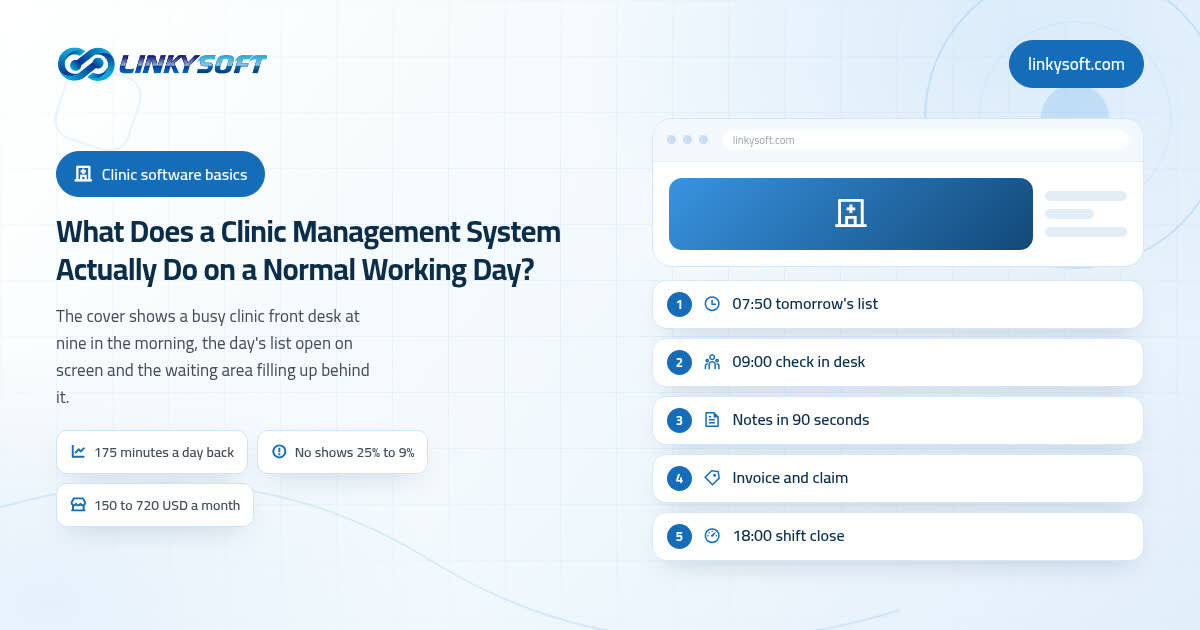
Most clinic software is sold as a list of features, which tells you very little about whether it is worth the money. So instead of a feature list, we walk through one ordinary Tuesday in a clinic with four doctors and forty booked visits, from the day list at 07:50 to the shift close at 18:00, showing the minutes and the money each part gives back, and saying plainly where a small clinic should buy the cheap ready made product rather than build anything.
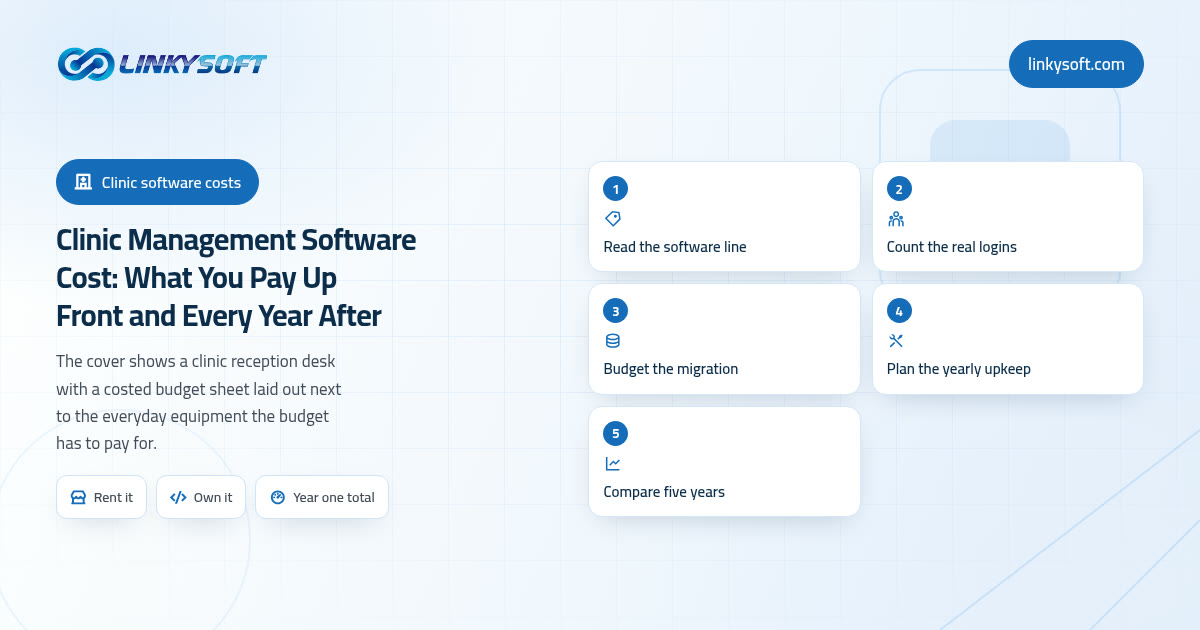
Most articles on this question quote one vendor's licence price and stop there. This one builds the whole bill a clinic actually signs: the software line, the migration, the training, the hardware on the desks, and the running costs that arrive every year after go live. It also runs the five year arithmetic for renting against owning at eight users and at forty, and says honestly where a custom build stops paying for itself.
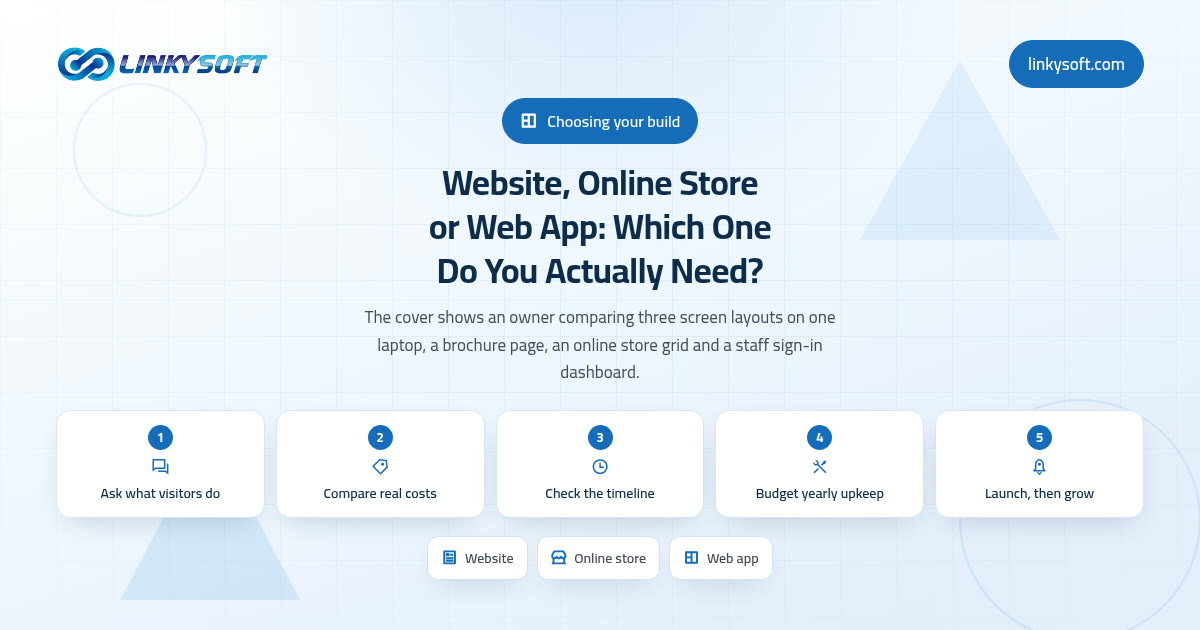
Three businesses ask us this same question in three different ways, and the honest answer is rarely the biggest option. This guide hands you a five minute test built from three questions, the build and running numbers we quote in practice for each choice, and the plain arithmetic that shows when the cheaper option earns more. By the end you will have a decision, a budget and a next step.
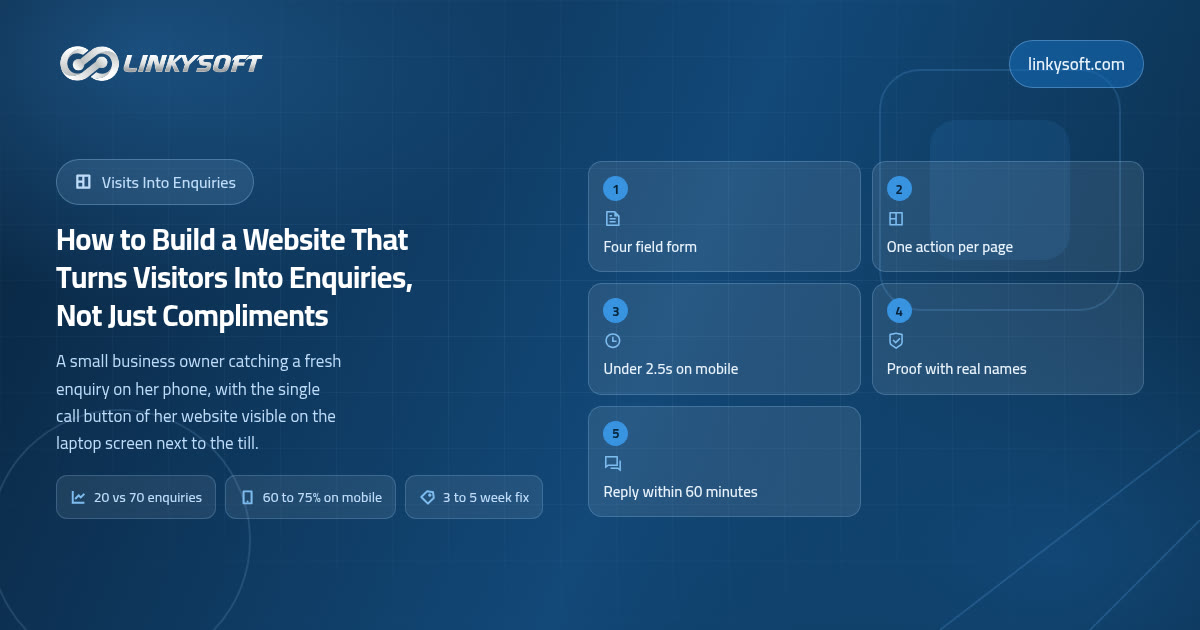
Your new site got compliments and the enquiry inbox barely moved, which is a specific problem with a specific fix. This is the arithmetic of your own website in three numbers you can find in an afternoon, the five changes we make for real clients in the order that moves the number, and an honest account of when repairing five pages beats paying for a full rebuild.
Most guides to this decision hand you a polite checklist and leave you no wiser when you are actually sitting across the table. This one does the opposite. Here are the exact questions to ask a web design company, the answers that should make you pause, the arithmetic behind a US$2,000 quote against a US$12,000 one, the timeline you can hold anyone to, and an honest account of when the cheapest option is the right one.
Nearly every article on this subject tells you to buy software in the first paragraph. This one does the opposite: it gives you the actual break points in units, editors and hours, the arithmetic to price your own situation on a calculator, the costs that hide inside an ordinary working week, and a plain statement of when keeping the spreadsheet is still the correct business decision.
Most owners are sold a shape before anybody asks how many things they actually sell, so here is the arithmetic we use with clients instead: how many addresses a search engine gets to rank, what each extra page really adds to the bill and the calendar, what a single page quietly hides from your own numbers, and a five question test that reaches an answer in ten minutes, including the many times the honest answer is the cheaper one page site.
Most comparisons of these two paths stop at a feature list, so this one hands you the arithmetic we actually run with clients instead: what the sellable layer adds on top of the very same screens, what each path costs to run every month, how many paying customers it takes to break even, and the honest cases where buying something ready-made, or simply keeping the tool internal, is the smarter purchase.
Traffic fell after your new site went live, and no one can say why. This guide helps you find the cause from what you see on your charts: a missing tracking tag, a leftover block from the test site telling Google to stay away, old links with no permanent redirect, pages Google sees as empty, lost star ratings or a missing language. It shows how to check each one in Search Console and ends with who should pay for the repair.
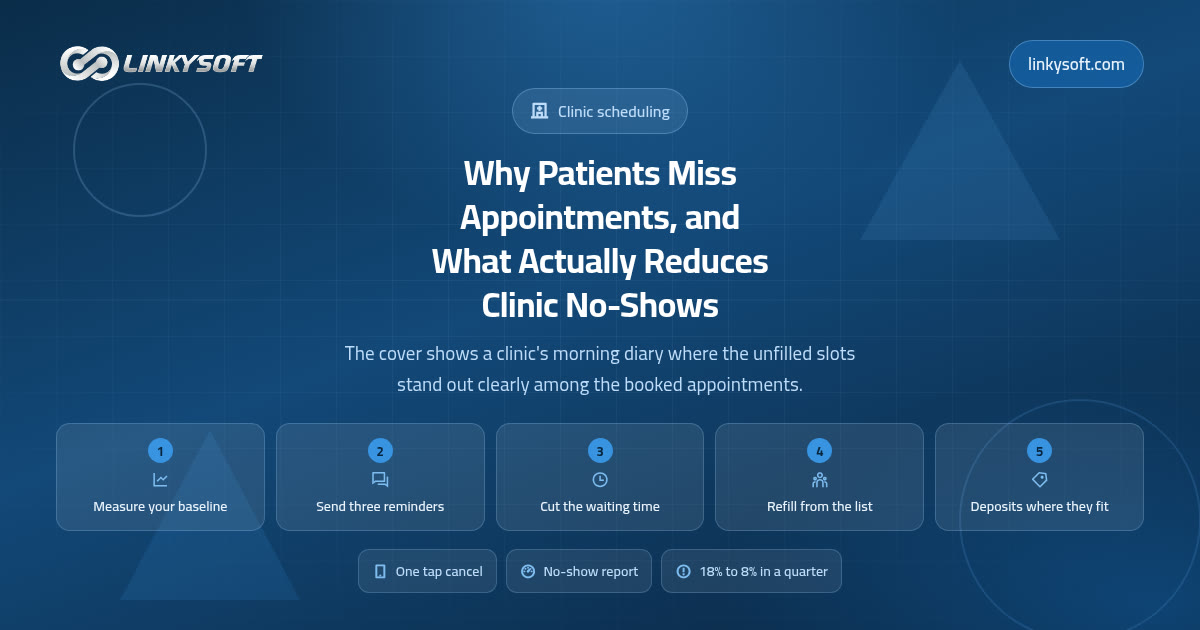
An 18 percent miss rate in a five clinician practice quietly costs around 19,000 US dollars a month, and yet half of those misses are simply forgetting, which is the cheapest problem you will ever fix. This guide separates the misses software genuinely solves from the ones only your scheduling policy can, prices every fix with arithmetic you can check on paper, and says plainly which clinics should spend nothing at all.
There is no single answer, and any vendor who gives you one before asking about your clinic is guessing. Five things set the number: how many people log in, how much history has to move, what the system must connect to, who runs the servers, and how long you commit for. Here is how each one moves the total, which charges land between signing and go live, what the three charging models are really pricing, and how to put two very different quotes onto one comparable sheet.
I'll help you with anything you want to do.
Pick a topic and ask me anything about it.
There are no topics to ask about right now.
Talk to a human
Talk to a human